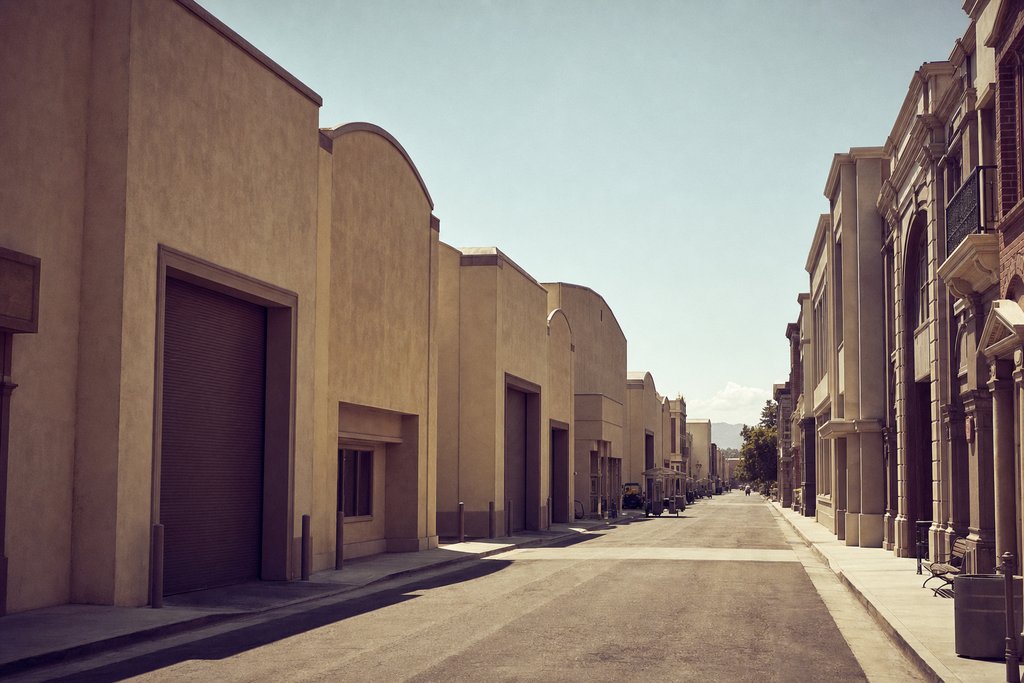
Location file
Warner Bros. Studio Tour: What a Working Lot Actually Shows You
Almost every entry in this index is a place the public can reach on its own. This one is the exception: the studio lot at Burbank is secured, working ground, and the only lawful way onto it is a booked tour with a guide who does not leave you. That constraint is what the visit is about, and it is worth understanding before you buy a ticket.
What follows is what the tour does show, what it does not, and how to judge whether the day is worth it. It is written for someone deciding between this and a self-driven circuit of the public Los Angeles locations, which cost nothing and can be done in the same amount of time.
What a backlot actually is
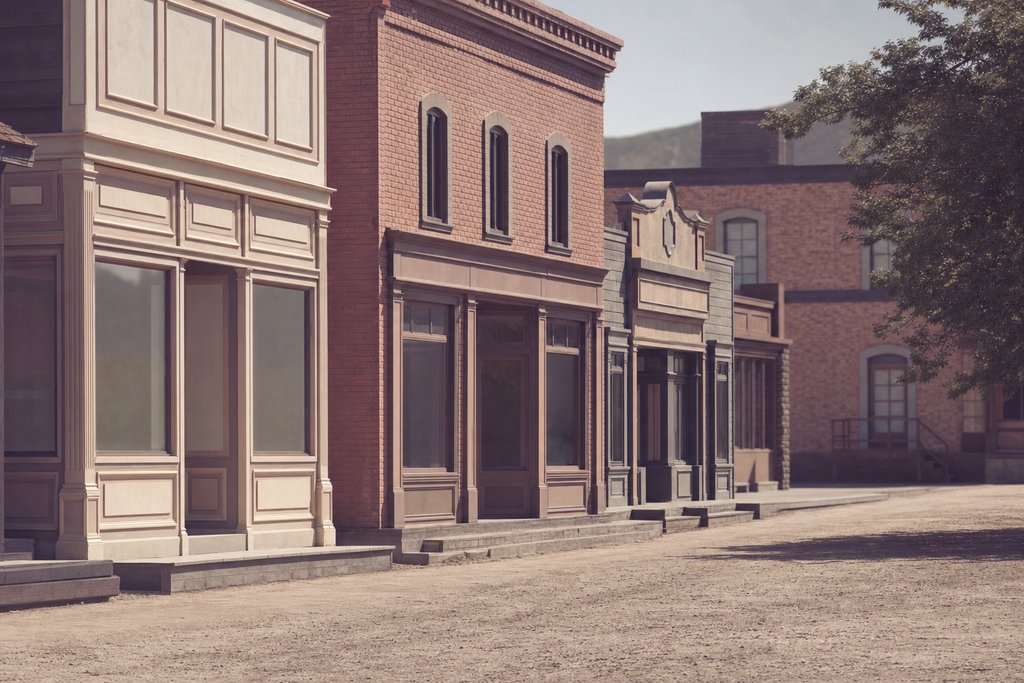
A backlot street is a permanent set of building facades with nothing behind them. The frontages are real construction (brick, render, timber, glazed windows) and are three or four storeys where the shot needs height, but they are shells. A door opens onto scaffolding. The reason studios keep them is that a facade can be repainted, re-signed and re-dressed in a day, so one street can be New England in the morning and the Midwest in the afternoon.
Burbank's lot carries several of these: a residential street of clapboard houses, a small-town commercial block, a stretch of brownstones and a stub of city street with a working traffic signal. Between them they have supplied the background to a very large number of American productions, and standing in one is the closest thing to seeing how the trick is done.
What the tour includes
The guided route
Roughly two hours in an open electric cart with a guide, covering the backlot streets, the exterior of the sound stages, the mill and paint shops where sets are built, and the prop warehouse. The cart stops for photographs at fixed points and does not stop elsewhere.
- Address
- 3400 West Riverside Drive, Burbank, California
- Status
- Standing
- Access
- Guided tour only, ticketed
- Checked
- Aug 2026
A standing set, if one is free
The tour enters one or two interior sets that are not shooting that day. Which ones is decided on the morning and is never guaranteed in advance. This is the single most variable part of the visit and the part most complaints are about; a lot in production is a lot where a stage can close to visitors at an hour's notice.
- Address
- Sound stages, Warner Bros. lot, Burbank
- Status
- Changed (rotates constantly)
- Access
- Tour only, subject to production
- Checked
- Aug 2026
The exhibition hall
A self-guided two-storey space at the end of the route with costumes, props and vehicles from productions made on the lot, plus a large permanent installation devoted to the studio's best known franchises. This is where the last hour goes, and it is the part that runs to your own clock, not the guide's.
- Address
- Warner Bros. lot, Burbank, California
- Status
- Standing
- Access
- Included in tour ticket
- Checked
- Aug 2026
What the tour does not include
Three things people arrive expecting and do not get. There is no free roaming: the backlot is covered by cart, and getting off it happens only where the guide stops. There is no guaranteed set: the standing sets shown depend entirely on the production schedule. And there is no filming to watch; a live shoot is closed, and the tour is routed away from it, not towards it.
It is also not in Hollywood. The lot is in Burbank, eight miles north over the Cahuenga Pass, and the drive from Hollywood Boulevard is twenty minutes in light traffic and forty in the afternoon. Parking on site is charged separately from the ticket.
How to judge whether it is worth a day
It is worth it if you want to see how sets are made; the mill, the paint shop, the prop warehouse and the facades are genuinely instructive, and there is no other way to see them. It is worth much less if you have a specific production in mind, because whether anything from it is standing on the day is outside anyone's control.
For a day in Los Angeles built around places you can walk into for nothing, the master index lists Griffith Observatory, the Bradbury Building, Angels Flight and Vasquez Rocks, all of which are public and none of which requires a booking.
Practicalities
Tours run through the day and are booked for a specific start time; latecomers are moved to the next available slot instead of caught up. Bags are searched at the gate. The backlot is exposed and shadeless, and Burbank sits in the San Fernando Valley, which runs several degrees hotter than the coast: in July and August the morning slots are noticeably more comfortable.
Photography is allowed outdoors and on the backlot and is restricted inside the stages, where the rule is set by the production rather than by the tour. For the practical side of an American trip more generally, see travel tips, tipping and the prepaid SIM file.
What has changed since 2016
The exhibition hall has been rebuilt and substantially expanded, the tour route has been re-sequenced to end there rather than begin there, and the cart fleet has been replaced. The backlot streets themselves are the least changed part of the site, which is the point of them: a facade that has stood for decades is an asset, and studios do not demolish assets.
How a studio lot is laid out
A working lot is an industrial site with four kinds of space on it, and the tour crosses all four. Understanding the layout is most of what makes the visit interesting.
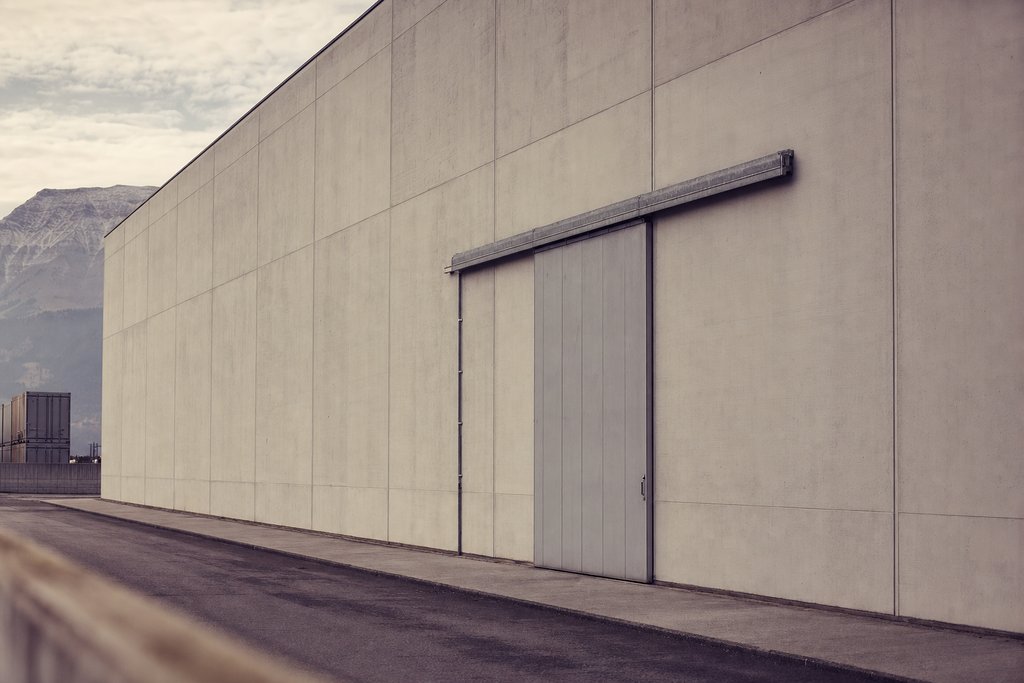
- Sound stages. Windowless, acoustically isolated sheds, numbered, not named, ranging from small to enormous. Interiors are built inside them. From outside they tell you nothing except the scale of what fits in.
- The backlot. Permanent exterior sets: streets of facades with nothing behind them, re-dressed for each production. Cheaper to maintain than to rebuild, which is why some of these streets are older than most of the buildings in Los Angeles.
- Support shops. The mill, the paint shop, the prop warehouse, the costume department. This is where the work actually happens and it is the part of the tour with the most to look at.
- Offices and post. Ordinary buildings full of ordinary desks, which the tour passes and does not enter.
What the backlot streets can be
A facade street is a set of interchangeable frontages, and dressing it is a matter of signage, street furniture, vehicles and greenery. The same block of brownstones can be New York in 1975 or Chicago in 1998; the same small-town commercial row can be anywhere in the Midwest in any decade since the 1930s.
What limits it is architecture that cannot be disguised; a specific roofline, an unusual window proportion, a corner that has appeared too often. Studios rebuild sections periodically for exactly that reason, and the guides will point out which parts are recent.
The thing that surprises most visitors is how small it is. A backlot street that reads as a long city block on screen is often two hundred metres, shot from angles chosen to hide both ends.
Booking and choosing a tour
| Option | Length | What it adds |
|---|---|---|
| Standard tour | ~3 hours | Backlot, shops, one or two sets, exhibition hall |
| Extended / deluxe | Most of a day | Lunch on the lot, more stage access, smaller group |
| Exhibition only | 1–2 hours | Not always offered; the hall without the lot |
Tours are booked for a specific start time and late arrivals are moved to the next available slot rather than caught up. Bags are searched at the gate. Photographic ID is generally required. Parking on site is charged separately from the ticket and is the normal way to arrive.
Photography rules
Outdoors and on the backlot, photography is unrestricted for personal use. Inside stages it is restricted, and the restriction is set by the production occupying the stage, not by the tour: which is why it can change between the morning and afternoon tours on the same day.
Professional and commercial photography needs separate permission entirely. Drones are prohibited over the lot without exception.
Timing the visit
Burbank sits in the San Fernando Valley, which runs several degrees hotter than the coastal basin and considerably hotter than Santa Monica. In July and August the afternoon on an exposed backlot is genuinely uncomfortable, and the morning slots are the ones to take.
Production activity is highest on weekdays, which cuts both ways: there is more happening to look at, and more stages are closed. Weekends have quieter lots and better set access. Neither is obviously better and neither can be predicted at booking.
Getting there
The lot is in Burbank, about eight miles north of Hollywood Boulevard over the Cahuenga Pass: twenty minutes without traffic and forty in the afternoon. It is marketed under the Hollywood name because the district is the brand, not because of the address.
Public transport is possible: the Metro B Line to North Hollywood and a bus, or a Metrolink train to Burbank and a short ride. Neither is quick. For most visitors this is a driving trip and the on-site parking is the practical answer.
What to do with the rest of the day
Burbank and the surrounding Valley hold several other studio operations, most of which do not admit visitors. What is worth adding instead is the public side of Los Angeles film geography, which costs nothing:
- Griffith Observatory, fifteen minutes south over the hill, free to enter and the most-filmed public building in the city.
- The Hollywood sign viewpoints from Beachwood Canyon or Lake Hollywood Park; the sign itself is not approachable and the viewpoints are.
- Downtown for the Bradbury Building and Angels Flight, both covered in the master index.
Whether it is worth the money
It is worth it if the interest is in how the work is done. The mill, the paint shop, the prop warehouse and the facades are genuinely instructive, and there is no other lawful way to see them. The guides are well briefed and the questions get real answers.
It is worth much less if the interest is a specific production, because whether anything from it is standing on the day is outside anyone's control and cannot be promised at booking. That is the single most common source of disappointment, and it is a structural feature of touring a working studio rather than a failure of the tour.
Questions worth asking the guide
The guides are well briefed and the tour improves considerably if you ask about process rather than about celebrities. Five that reliably get a real answer:
- How long does it take to re-dress a backlot street for a new production?
- What decides whether a set is struck or kept standing between seasons?
- How much of the prop warehouse is actually hired out, and to whom?
- Which parts of this lot are the oldest, and what has been rebuilt?
- What is shooting on the lot today, and why can we not go near it?
Accessibility and comfort
The carts are step-up and the backlot surfaces are sealed but uneven in places; step-free arrangements exist and need to be requested at booking, not on the day. The route is largely outdoors and unshaded, there is one scheduled comfort stop on the standard tour, and water is worth carrying in summer.
Frequently asked questions
What does the Warner Bros. Studio Tour in Hollywood actually include?
A guided route through a working lot in Burbank: backlot streets, one or two standing sets that are not shooting that day, a props and costume department, a sound stage and a self-guided exhibition hall at the end. The specific sets change constantly, because the lot is in production and a stage in use is a stage the tour does not enter.
How long does the studio tour take?
The standard tour runs about three hours, of which roughly two are guided and the last hour is self-guided in the exhibition space. Longer deluxe versions add lunch on the lot and more stage access and take the best part of a working day.
Is the Warner Bros. lot in Hollywood?
No; it is in Burbank, about eight miles north of Hollywood Boulevard over the Cahuenga Pass. The tour is marketed under the Hollywood name because the district is the brand, but the address is Burbank and the drive from central Hollywood takes twenty minutes without traffic.
Can you visit the backlot without a tour?
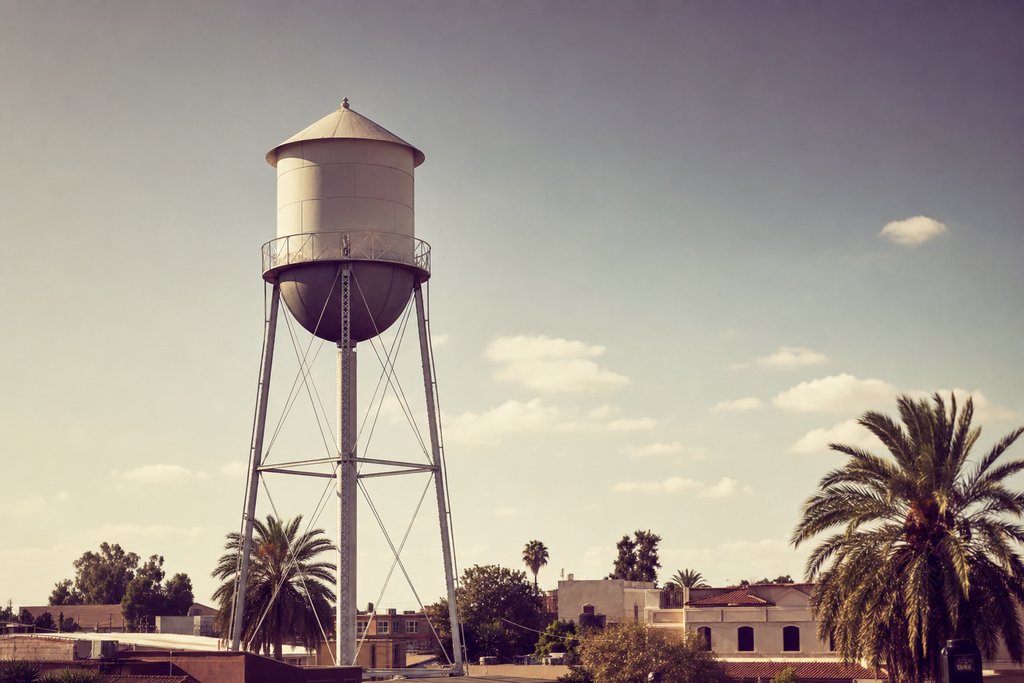
No. It is a secured working studio and the only lawful access is on a booked tour with a guide. Nothing on the backlot is visible from the public street beyond the gates and the water tower.