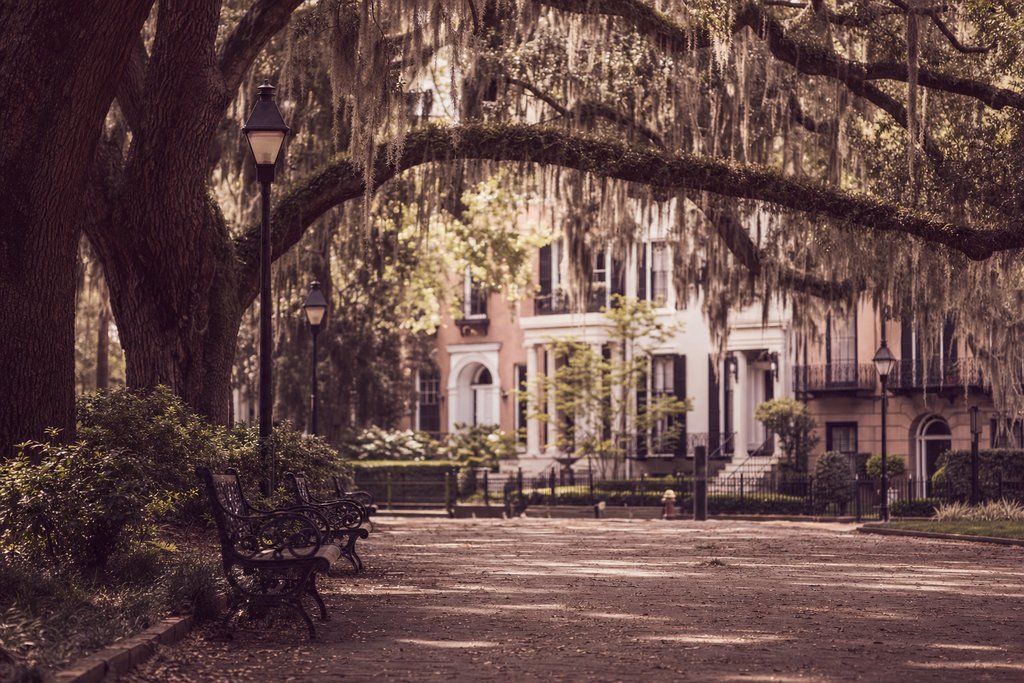
Location file
Savannah's Food Scene: Lowcountry Cooking, District by District
Savannah's food is estuary food. The city sits behind a tidal marsh on the Georgia coast, and the cooking that developed here (lowcountry cooking, shared with the South Carolina coast around Charleston) is built on shellfish, rice and pork instead of the beef and barbecue of the interior South.
This file covers what the tradition actually is, which districts do what, and the practical business of eating in a city where the best-known dining rooms are booked out weeks ahead.
What lowcountry cooking is
The defining dishes come from a specific history. Rice was the plantation crop of the Georgia and Carolina coast, cultivated using West African methods and knowledge brought by enslaved people, and the Gullah Geechee foodways that descend from that are the foundation of what is now marketed as lowcountry cuisine. That lineage is not decorative background; it is where the dishes come from.
In practice, the things to eat:
- Shrimp and grits: local white shrimp over stone-ground grits, with a gravy that varies by kitchen. The test of a place.
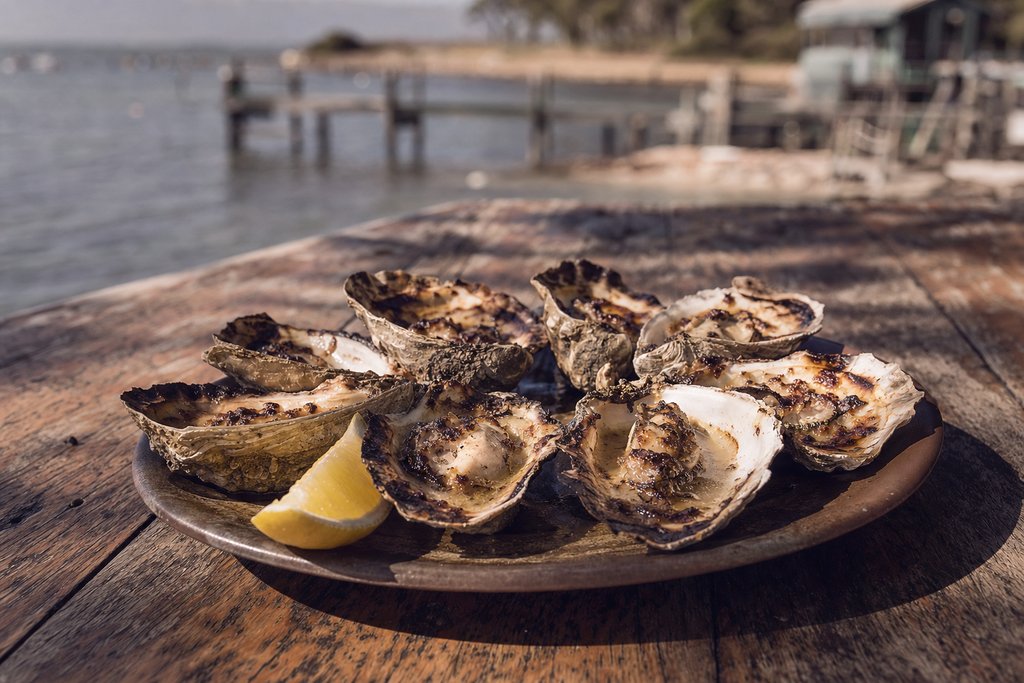
- Oysters: wild Georgia oysters grow in clusters in the marsh and are small, intensely salty and quite unlike a farmed single.
- She-crab soup: a rich crab bisque, traditionally with roe.
- Red rice: rice cooked with tomato and pork, the most direct survivor of the West African tradition.
- Collards, cornbread, fried chicken: the wider southern repertoire, done well here and not specific to the coast.
The historic district
North of Forsyth Park, in the grid of squares, is where the well-known dining rooms are; the ones with reputations that predate the current wave, in eighteenth- and nineteenth-century buildings with dining rooms to match. They are good and they are booked: at weekends, weeks ahead, and some operate a same-day queue rather than a reservation at all.
The district also holds the tourist end of the trade, concentrated along River Street below the bluff. River Street is worth walking and is not where locals eat.
Starland and the south side
South of Forsyth Park, the Starland district has taken most of the newer openings: smaller rooms, shorter menus, lower prices and much better odds of getting a table. This is where to go on a Saturday night without a booking, and it is a twenty-minute walk or a short ride from the historic district.
The trade-off is that Starland is a working neighbourhood, not a preserved one, and the walk down Bull Street from the park is pleasant while the cross streets are ordinary.
Tybee Island
Eighteen miles east, on the Atlantic, and a different proposition: straightforward seafood eaten outdoors near the water, at prices below the historic district. It is a thirty-minute drive and there is no useful public transport.
Tybee is also a filming location in its own right; the beach house from The Last Song is on the north end, covered in the Carolina coast file: which makes an afternoon there and dinner on the water a reasonable combination.
Timing and season
Oyster season runs roughly from autumn into early spring, and local oyster roasts (a communal affair with a shovel, a sheet of steel and a lot of newspaper) happen in that window. Outside it, oysters on a Savannah menu are usually from somewhere else, which is fine but is not the local thing.
Savannah in July and August is very hot and very humid, and eating outdoors is unpleasant by midday. Spring and late autumn are the seasons the city is built for.
Booking, tipping and practicalities
- Book the historic district two to four weeks ahead for a weekend. Weeknights are considerably easier.
- Do not book Starland: most of it does not take reservations and works on a walk-in and wait model.
- Open container: the historic district permits alcohol in a plastic cup on the street within a defined boundary. It is a genuine local rule and it is boundaried; the boundary matters.
- Tipping: eighteen to twenty per cent, as everywhere in the United States: see the tipping file.
- Parking: metered on street in the historic district, enforced, and easier in the garages.
Walking it
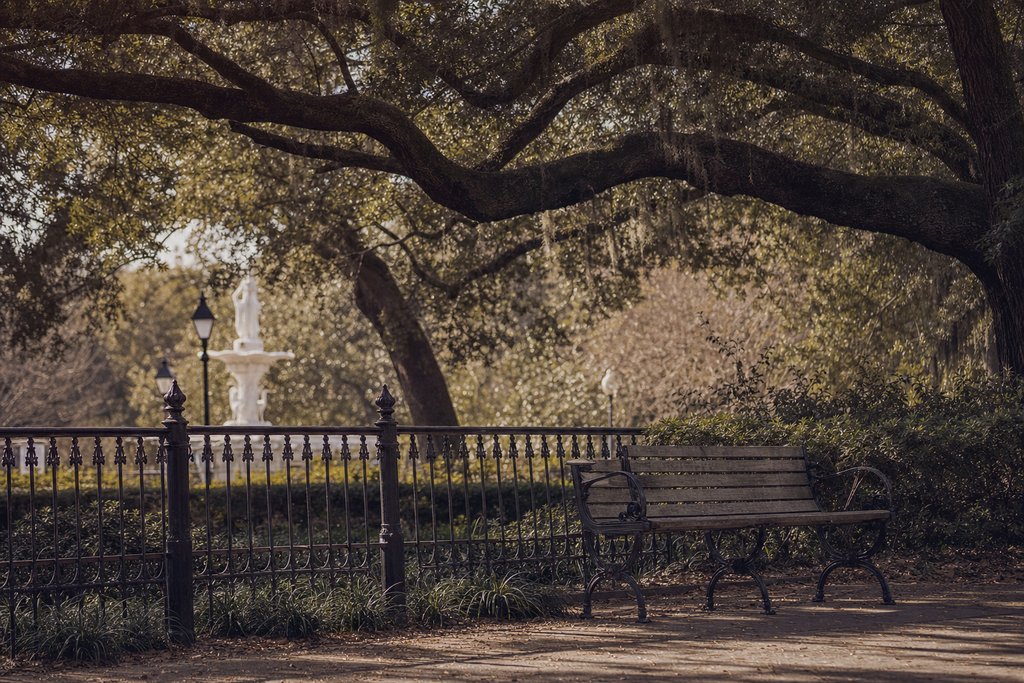
The historic district is a grid of squares laid out in 1733, and the squares make it one of the most walkable American city centres: nothing in it is more than twenty minutes from anything else, and the live oaks mean most of the route is shaded. Eating your way across it on foot is the correct method.
Chippewa Square, on the same walk, is where the Forrest Gump bench scene was shot; the bench itself is now in the Savannah History Museum, which is covered in the master index.
The rest of the American material is in the United States hub.
The dishes, and how to judge them
| Dish | What it is | What separates good from bad |
|---|---|---|
| Shrimp and grits | Local white shrimp over stone-ground grits | Grits cooked slowly and seasoned; shrimp not overdone; a gravy with body, not cream |
| She-crab soup | Crab bisque, traditionally with roe | Crab you can taste over the sherry, and no flour thickening |
| Red rice | Rice cooked with tomato and pork | Separate grains, deep colour, smoke from the pork, not paprika |
| Oysters | Wild Georgia clusters | In season, small and salty; out of season, honestly labelled as from elsewhere |
| Fried chicken | The southern staple | Brined, fried to order, and worth the twenty-minute wait it should take |
Where the food comes from
Savannah sits behind a tidal marsh at the mouth of a river, and almost everything distinctive on its menus comes from within fifty miles. The shrimp are trawled out of Wassaw Sound and the surrounding creeks; the oysters grow wild in clusters on the marsh banks; the rice tradition is inland, on the old plantation ground along the Ogeechee and the Savannah.
That last one matters for understanding what you are eating. Rice was the crop that made this coast wealthy, and it was cultivated using West African methods and expertise brought by enslaved people. The Gullah Geechee foodways descended from that are the actual foundation of what is now marketed as lowcountry cuisine, and the dishes that best survive (red rice, purloo, okra soup) are the ones with the clearest line back to it.
The districts in more detail
The historic district, north of Forsyth Park
The dining rooms with reputations, in eighteenth- and nineteenth-century buildings. Booking is essential at weekends and several places operate a same-day list rather than reservations. This is also where the highest concentration of tourist-facing restaurants is, particularly along River Street below the bluff, which is worth walking and not worth eating on.
- Where
- North of Forsyth Park, Savannah
- Booking
- 2–4 weeks for a weekend
- Checked
- Aug 2026
Starland, past the Victorian district
Smaller rooms, shorter menus, lower prices, and much better odds without a booking. A twenty-minute walk south down Bull Street from the park, or a short ride. This is where to eat on a Saturday night if you have not planned.
- Where
- South of Forsyth Park, Savannah
- Booking
- Mostly walk-in
- Checked
- Aug 2026
Tybee Island, at the beach end
Eighteen miles east on the Atlantic. Straightforward seafood by the water at prices below the historic district, and a thirty-minute drive with no useful public transport.
- Where
- Tybee Island, Georgia
- Booking
- Rarely needed
- Checked
- Aug 2026
Breakfast, lunch and the middle of the day
Savannah's reputation is built on dinner, and the daytime eating is under-discussed. Two patterns are worth knowing. Southern breakfast (biscuits, sausage gravy, grits, country ham) is served properly at a handful of places in the historic district and is a substantial meal rather than a light one. And the midday trade in Starland and along Habersham Street runs to sandwiches, bowls and counter service that is both cheaper and better than the equivalent in the tourist core.
The city also keeps an afternoon lull. Many kitchens close between about half past two and five, which catches out anyone arriving hungry at four.
Drinking, and the open-container rule
The historic district permits alcohol on the street in a plastic cup within a defined boundary, and it is a genuine local ordinance rather than a tolerated custom. Two things follow from it: the cup must be plastic and under a stated size, and the boundary is real: carrying a drink outside it is an offence.
Practically, it means a drink can be carried between bars and around the squares, which changes how an evening in the district works. It does not mean open drinking is unrestricted, and the local police enforce the boundary.
Seasonality
Wild Georgia oysters are harvested roughly from autumn into early spring, and the oyster roasts; a communal affair with a shovel, a steel plate and a lot of newspaper: happen in that window. Outside it, oysters on a menu here are usually from elsewhere, which is fine and should be said on the menu.
Shrimp season runs through the warmer months, so the two headline ingredients are almost complementary. July and August are very hot and very humid and eating outdoors is unpleasant by midday; late autumn and spring are the seasons the city is built for.
The order to walk the squares in
Twenty-two of the original squares survive, and the shaded route between them is what makes the district walkable in August as well as in April.
Chippewa Square, on the same walk, is where the Forrest Gump bench scene was shot; the bench was a prop and now sits in the Savannah History Museum, which is covered in the master index. Tybee Island carries the beach house from The Last Song, covered in the Carolina coast file.
Three meals that show the city
- Breakfast: biscuits with sausage gravy, grits and country ham at a historic-district room that opens at seven. A substantial meal rather than a light one, and it sets up a walking day.
- Lunch: a communal-table southern lunch (fried chicken, collards, mac and cheese, cornbread, sweet tea) served family style. The format is as much the point as the food.
- Dinner: oysters and shrimp and grits at a Starland room, walked to down Bull Street from the park in the last of the light.
That sequence costs less than one dinner in the tourist core and is a better day.
Practical notes
- Sweet tea means iced tea already sweetened, heavily. Unsweetened has to be asked for by name.
- The afternoon lull: many kitchens close between about half past two and five.
- Parking in the historic district is metered and enforced, and the garages are easier than the street.
- Getting there: Savannah has its own airport; Charleston is two hours north and Jacksonville two and a quarter south.
Frequently asked questions
What food is Savannah known for?
Lowcountry cooking: shrimp and grits, oysters, she-crab soup, rice dishes descended from the Gullah Geechee tradition, and the southern staples of fried chicken, collards and cornbread. The city sits on a tidal estuary, so shellfish, not beef, is the local material.
Do you need a reservation to eat in Savannah?
For the well-known dining rooms in the historic district, yes, and often weeks ahead at weekends. For oyster bars, casual seafood and the market counters, no. Booking is the difference between eating where you planned and eating well anyway.
Where should you eat in Savannah?
Three areas: the historic district north of Forsyth Park for the dining rooms, the Starland district south of it for newer and cheaper places, and Tybee Island eighteen miles east for straightforward seafood by the water.
Is oyster season a real thing in Savannah?
Yes. Wild Georgia oysters are harvested roughly from autumn through early spring, and local oyster roasts run in that window. Outside it you will still be served oysters, but they will usually be from elsewhere.