Location file
Civil Rights History: The Rosa Parks Bus Stop
On 1 December 1955 Rosa Parks was arrested on a Montgomery city bus for refusing to give up her seat, and the boycott that followed ran for three hundred and eighty-one days. This file is about what is actually on the ground in Montgomery today, because the answer is more complicated than most itineraries suggest and one of the key objects is in another state entirely.
The arrest site
Montgomery Street at Lee Street
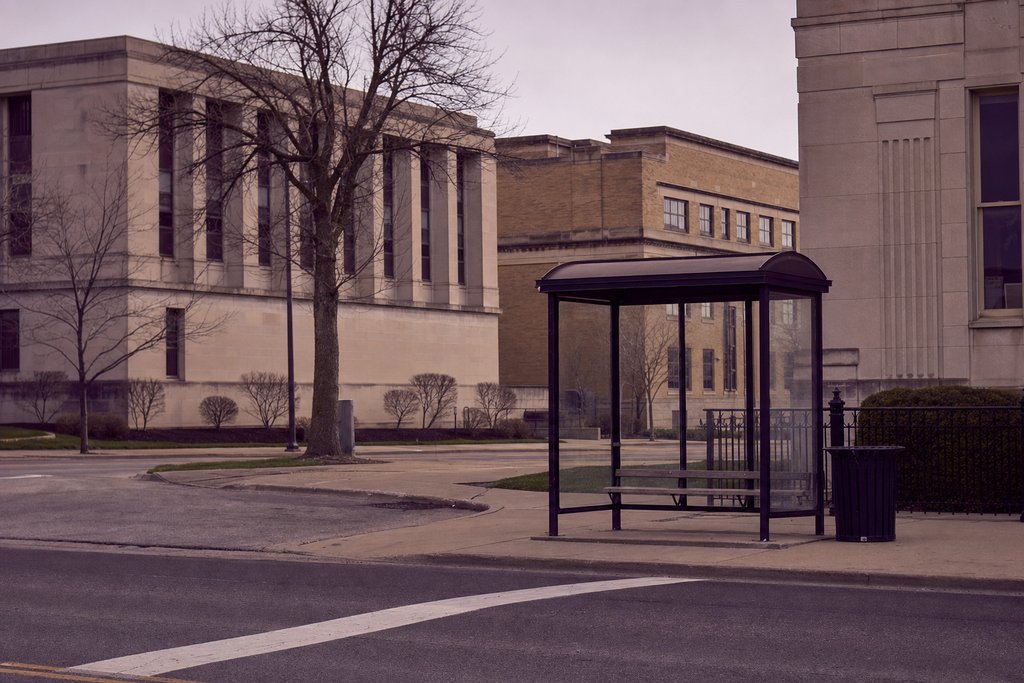
The stop where Parks boarded was outside the Empire Theatre on Montgomery Street. The theatre has gone; the Rosa Parks Museum, operated by Troy University, now stands on the site, and the location of the stop is marked at street level.
What that means practically: the corner is authentic, the building is not, and there is no surviving streetscape from 1955 to photograph. The value of standing there is the geography; the stop is a few hundred metres from the state capitol and from the church where the boycott was organised, and the compactness of that is the thing the maps do not convey.
- Address
- 252 Montgomery Street, Montgomery, Alabama
- Status
- Changed (original building demolished)
- Access
- Street open; museum ticketed
- Checked
- Aug 2026
Where the bus actually is
Not in Alabama
The bus itself, Cleveland Avenue bus number 2857, was located decades later in a field in Alabama, bought at auction, restored, and is now displayed at the Henry Ford Museum in Dearborn, Michigan. Visitors can board it and sit in it.
The Montgomery museum displays a period bus of the same type for its own exhibit, which is clearly labelled as such. Anyone travelling to Alabama specifically to see the bus is travelling to the wrong state, and that is worth saying plainly.
- Address
- Henry Ford Museum, Dearborn, Michigan
- Status
- Standing (relocated and restored)
- Access
- Open, ticketed
- Checked
- Aug 2026
Dexter Avenue and the church
Dexter Avenue King Memorial Baptist Church
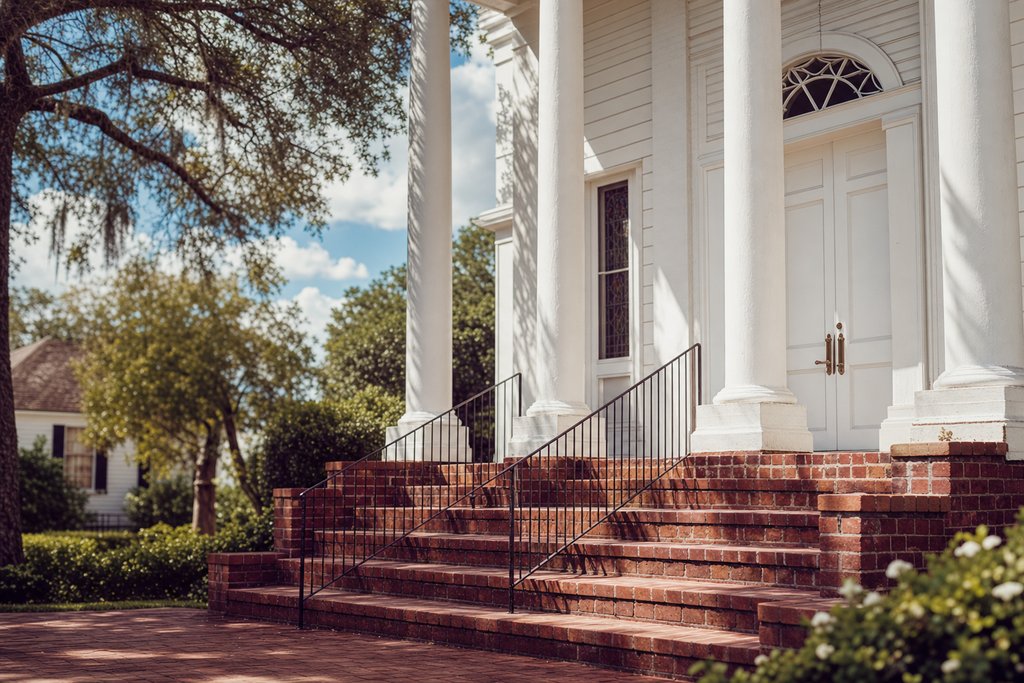
The church where Martin Luther King Jr was pastor from 1954 and where the boycott was organised, at the foot of the hill below the state capitol. The building is original, still an active congregation, and runs guided tours on a schedule that has to be booked because the building is in use.
- Address
- 454 Dexter Avenue, Montgomery, Alabama
- Status
- Standing
- Access
- Guided tours, booking required
- Checked
- Aug 2026
The Dexter parsonage
The house the King family lived in, a few minutes' drive from the church, preserved with period furnishing. The front porch was bombed in January 1956 and the damage is pointed out on the tour.
- Address
- 309 South Jackson Street, Montgomery, Alabama
- Status
- Standing
- Access
- Guided tours, ticketed
- Checked
- Aug 2026
The rest of the walkable centre
Freedom Rides Museum
Housed in the former Greyhound bus station where the Freedom Riders were attacked in May 1961. The building is the original and the exterior is unaltered, which makes it the most intact civil rights site in the city.
- Address
- 210 South Court Street, Montgomery, Alabama
- Status
- Standing
- Access
- Open, ticketed, limited days
- Checked
- Aug 2026
The Legacy Museum and the National Memorial for Peace and Justice
Two connected sites opened in 2018, the museum in a former warehouse near the river and the memorial on a hill about a kilometre away. They are the most demanding stops in Montgomery and need to be given time instead of fitted in; a combined ticket covers both.
- Address
- 400 North Court Street and 417 Caroline Street, Montgomery, Alabama
- Status
- Standing
- Access
- Open, ticketed, timed
- Checked
- Aug 2026
Walking the city
The core sites sit within about two kilometres. A workable order is the Rosa Parks Museum first, then Dexter Avenue and the church, then the Freedom Rides Museum, then the Legacy Museum and the memorial in the afternoon. The parsonage needs its own slot because tours run to a timetable.
Practicalities
Montgomery is hot and humid from May to September and the walking route has little shade; mornings are better. Several of the sites close on Sundays and some on Mondays, and the church tour and the parsonage both require advance booking. Downtown parking is metered and plentiful.
The nearest major airports are Atlanta, about two and a half hours by road, and Birmingham, about ninety minutes. For the practical side of an American trip see travel tips and tipping in the USA.
Why this entry is in a travel index
Because the sites are physical, visitable and specific, and because the most common failure mode in visiting them is arriving with the wrong facts: expecting the original bus, expecting a preserved streetscape, expecting the church to be open on a Sunday morning to visitors. Each entry here says what is actually there and when that was last checked. The other American files are in the United States hub.
What happened, in the order it happened
On 1 December 1955 Rosa Parks, a seamstress and secretary of the local NAACP chapter, boarded a Cleveland Avenue bus in downtown Montgomery after work. When the white section filled, the driver ordered four Black passengers to give up their row. Three moved. Parks did not, and was arrested.
The boycott that followed began four days later and ran for three hundred and eighty-one days. It was organised at the Dexter Avenue Baptist Church, sustained by a car-pool system covering tens of thousands of daily journeys, and ended when a federal ruling against bus segregation took effect in December 1956.
Understanding the sequence matters for a visit, because the sites are the sequence: the arrest corner, the church where the response was organised, the parsonage that was bombed, and the station where the Freedom Riders were attacked five years later.
What is marked and what is not
Montgomery is unusually well marked for civil rights history, and the marking is uneven in ways worth knowing before arriving.
- Marked and intact: the church, the parsonage, the Greyhound station.
- Marked but rebuilt: the arrest corner, where the original theatre is gone and a museum stands on the site.
- Interpreted rather than preserved: the bus route itself, which is an ordinary working street with no continuous marking along it.
- Not in Montgomery at all: the bus, which is in Michigan.
Timing a visit
The Legacy Museum and the National Memorial for Peace and Justice are the two sites that need the most time and give the least warning about it. Both are demanding, both take substantially longer than a first-time visitor allows, and a combined ticket covers them. Putting them in the afternoon after the smaller sites is the right order.
The church runs guided tours to a timetable and around services; the parsonage is separately ticketed with its own tour times. Both need booking, and neither can be walked into. The Freedom Rides Museum has limited opening days.
Two full days is the honest answer for doing all of it properly. One day covers the arrest site, the church and either the Legacy Museum or the memorial, not both.
Practical notes
- Distances: the core sites are within about two kilometres and are walkable. The memorial is a further kilometre uphill from the museum and there is a shuttle.
- Season: May to September is hot and humid with little shade on the walking route. Mornings are considerably better.
- Closures: several sites close on Sundays and some on Mondays.
- Getting there: Atlanta is two and a half hours by road, Birmingham ninety minutes. There is no useful rail service.
- Photography is restricted inside several of the memorial and museum spaces, and that restriction is worth respecting without argument.
Related sites within a day's drive
Selma and the Edmund Pettus Bridge
Fifty miles west, and the site of the 1965 march. The bridge is a public road and can be walked; the interpretive centre at the far end covers the events. Half a day including the drive.
- Where
- Selma, Alabama
- Time needed
- Half a day
- Checked
- Aug 2026
Birmingham civil rights district
Ninety minutes north: the Sixteenth Street Baptist Church, Kelly Ingram Park and the Civil Rights Institute, all within a block of each other. A full day.
- Where
- Birmingham, Alabama
- Time needed
- A day
- Checked
- Aug 2026
Reading before going
Montgomery's sites are compact and the history behind them is not, and the visit is substantially better with some of it in hand. Parks's own account, written decades later, corrects the version most people carry; she was not simply a tired seamstress who happened not to move, she was a trained organiser and the secretary of the local NAACP chapter, and the boycott that followed had been prepared for.
That matters on the ground because the sites are the sites of an organised campaign: a church where it was run, a parsonage that was bombed for it, a car-pool network that moved tens of thousands of people a day for a year. The arrest corner is where it started, not what it was.
Frequently asked questions
Where is the Rosa Parks bus stop in Montgomery?
At the corner of Montgomery Street and Lee Street in downtown Montgomery, Alabama, where the Empire Theatre once stood. The Rosa Parks Museum now occupies the site, and the arrest location is marked at street level outside it.
Is the actual bus still there?
Not in Montgomery. The bus on which Rosa Parks was arrested in 1955 was restored and is displayed at the Henry Ford Museum in Dearborn, Michigan, where visitors can board it. The Montgomery museum holds a period bus used for its own exhibit.
What else is there to see in Montgomery?
The Dexter Avenue King Memorial Baptist Church and its parsonage, the Freedom Rides Museum in the former Greyhound station, the Legacy Museum and the National Memorial for Peace and Justice. All are within about two kilometres of each other in the city centre.
How long do you need in Montgomery?
A full day for the core sites, two if you want to give the Legacy Museum and the National Memorial the time they need. The downtown sites are walkable; the memorial is a fifteen-minute walk or a short drive from the centre.