Victoria desk
Melbourne's Street Art Scene: Hosier & Union Lanes
Melbourne's laneway art is the one attraction in this file that is guaranteed to be different when you arrive. The walls in Hosier Lane are repainted continuously (a piece can last a week, and on the busiest sections a few days) so nothing written about a specific work has any shelf life at all.
What does last is the geography, the permit system that makes it possible, and the practical business of photographing a narrow lane. That is what this file covers.
The six city-centre lanes
| Lane | Off | Character | Status |
|---|---|---|---|
| Hosier Lane | Flinders Street | Dense, layered, constantly repainted | Standing |
| Rutledge Lane | Hosier Lane | The loop behind Hosier | Standing |
| AC/DC Lane | Flinders Lane | Music-themed, bar frontages | Standing |
| Duckboard Place | AC/DC Lane | Large commissioned murals | Standing |
| Union Lane | Bourke Street Mall | Long, narrow, wall-to-wall | Standing |
| Croft Alley | Little Bourke Street | Chinatown, quieter | Standing |
Hosier Lane and Rutledge Lane
The bluestone lane opposite Federation Square
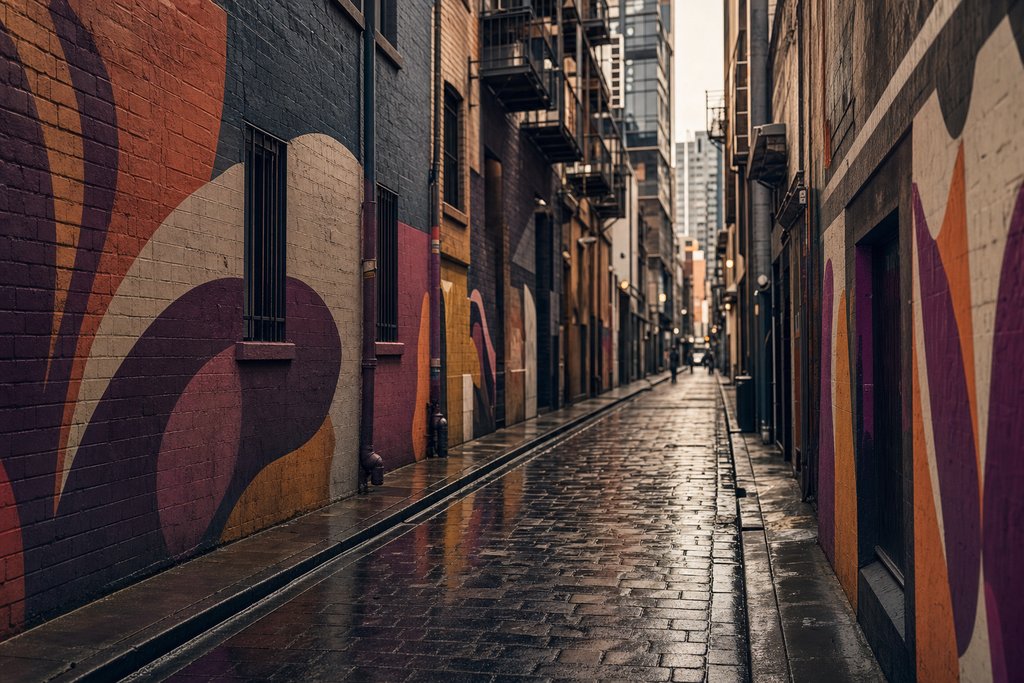
Hosier is a short cobbled lane running uphill from Flinders Street, with Rutledge Lane looping off it and back. Between them they carry the densest concentration of work in the city, floor to roofline, including the bins and the doors.
It is also the most crowded. Between ten and four it is full of tour groups and wedding photographers, and the light down at the Flinders Street end is poor for most of the day because the lane is narrow and the buildings are tall. Early morning is the only reliable window.
- Address
- Hosier Lane, off Flinders Street, Melbourne
- Status
- Standing (contents change weekly)
- Access
- Open, public lane
- Checked
- Aug 2026
AC/DC Lane and Duckboard Place
The music lanes off Flinders Lane
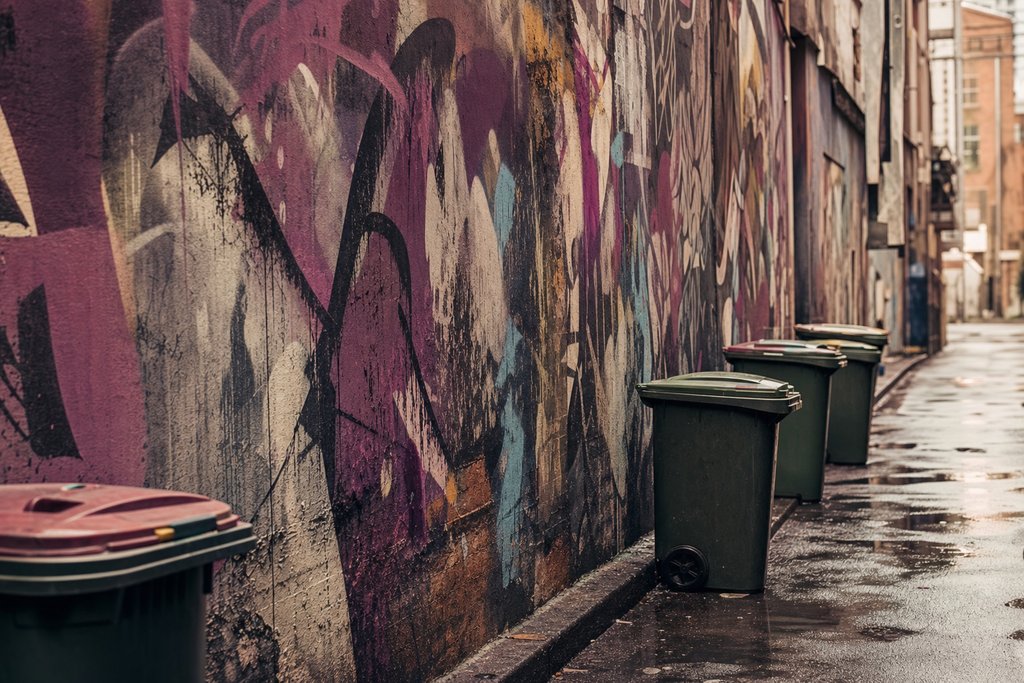
Renamed in 2004, AC/DC Lane runs into Duckboard Place and the two together are a different proposition from Hosier: fewer, larger, commissioned murals with a longer life, and a strip of bars and small venues at street level. The work here changes over months, not days.
This is the better pair for photographing whole pieces, because there is room to stand back and the walls are not layered six deep.
- Address
- AC/DC Lane and Duckboard Place, off Flinders Lane, Melbourne
- Status
- Standing
- Access
- Open
- Checked
- Aug 2026
Union Lane and Croft Alley
Union Lane, off Bourke Street Mall
A long service lane running north from the shopping mall, painted wall to wall along its full length as a council-supported project. It is the most consistent single stretch in the city and the easiest to walk with a pram or a wheelchair, being flat and reasonably wide.
- Address
- Union Lane, off Bourke Street Mall, Melbourne
- Status
- Standing
- Access
- Open
- Checked
- Aug 2026
Croft Alley, Chinatown
A narrow dogleg off Little Bourke Street, quieter than the rest and worth including because it shows what the lanes look like without an audience. There is a bar at the far end and very little else.
- Address
- Croft Alley, off Little Bourke Street, Melbourne
- Status
- Standing
- Access
- Open
- Checked
- Aug 2026
How the permit system works
The City of Melbourne distinguishes between graffiti and street art by consent: a property owner can give permission for a wall to be painted, and the council designates certain laneways as approved locations. Work in those lanes is not removed. Outside them it is still criminal damage and is cleaned off, sometimes within a day.
That distinction is invisible from the street, which is why the same city can look permissive on one corner and unmarked on the next. It also explains the difference in turnover between Hosier, where anyone can paint over anything, and Duckboard Place, where the large works are commissioned and are left alone.
Photographing the lanes
Three practical notes. The lanes are narrow and the light is contrasty; an overcast day is better than a bright one, which is convenient in Melbourne. Hosier faces roughly north-east and gets direct sun only in the early morning. And the lanes are working service alleys: bins get emptied, delivery vans reverse in, and the far end of Hosier is a rubbish collection point.
Photographing people painting is a courtesy question, not a legal one. Most artists do not mind a photograph of the wall and do mind a photograph of themselves.
The walk, in order
Start at Federation Square, cross to Hosier Lane, loop through Rutledge and back. Walk east along Flinders Lane to AC/DC Lane and Duckboard Place. North through the block to Little Bourke Street for Croft Alley, then west to Bourke Street Mall for Union Lane. Ninety minutes at a photographing pace, all of it inside the free tram zone.
Adding the laneway cafés makes it a morning. For the larger commissioned walls, Fitzroy and Collingwood, the same streets covered in the dessert file, carry work at a scale the city lanes cannot fit.
What changes and what does not
Everything on the walls changes. The lanes, the permit system and the routes do not. That is the reason this file names streets rather than artworks, and the reason the check date on it refers to the access and the geography rather than to what is painted there this week.
The rest of the Melbourne material is in the Australia desk.
How the lanes came to be painted
Melbourne's centre is laid out on a grid of wide streets with a secondary network of narrow service lanes behind them, cut for deliveries and rubbish. By the 1980s many were disused, and they filled with graffiti for the ordinary reason that a blank wall nobody watches attracts one.
What changed was the city's response. Rather than treating every painted wall as damage, the council developed a permit system that distinguishes work done with the property owner's consent from work done without it, and designated certain lanes as approved. Work in those lanes is not removed; work outside them still is.
That policy is the reason the lanes look the way they do, and it is invisible from the street: which is why the same city can appear permissive on one corner and unmarked on the next.
Reading a wall
- Tags: a writer's signature, fast, usually one colour. The base layer under almost everything.
- Throw-ups: bubble letters in two colours, quick to put up.
- Pieces: full colour, worked, several hours. What most people mean by street art.
- Stencils: cut in advance and sprayed through, repeatable, and the technique Melbourne became known for internationally in the early 2000s.
- Paste-ups: printed or drawn on paper and glued to the wall. Temporary by design.
- Murals: commissioned, large, and left alone. Most of the work in Duckboard Place is this.
Layering is the local convention: in Hosier Lane, painting over someone else's work is expected and is not vandalism within that context. In a commissioned mural lane it is.
Beyond the city centre
- Fitzroy and Collingwood: Brunswick and Smith streets and the lanes off them carry larger commissioned walls at a scale the city lanes cannot fit.
- Brunswick: Sydney Road and the alleys behind it, plus a long stretch along the Upfield bike path.
- Footscray: a different scene again, west of the river, and much less photographed.
- Fitzroy's Keith Haring mural at the former Collingwood Technical School: a 1984 work, conserved, not repainted, and the oldest significant piece in the city.
Photographing a narrow lane
Three constraints. The lanes are narrow, so a wide lens is close to essential for a full wall. The light is contrasty and comes down from a strip of sky, which is why an overcast day works better here: convenient in Melbourne. And they are working service alleys: bins get emptied, delivery vans reverse in, and the far end of Hosier is a rubbish collection point.
Photographing the walls is unrestricted. Photographing artists at work is a courtesy question: most do not mind a photograph of the wall and do mind one of themselves.
Practical notes
- All six central lanes are inside the free tram zone.
- Aspect: north-east, so the direct light on Hosier is gone by mid-morning.
- Union Lane is flat and wide enough for a pram or a wheelchair; Hosier is cobbled and sloping.
- Every lane here is public, so a guided tour buys context about the artists, not entry.
- The walls change weekly, so any photograph of them, including the ones on this page, records a date rather than a place.
Frequently asked questions
Where is the street art in Melbourne?
Hosier Lane and Rutledge Lane opposite Federation Square are the best known and the most photographed. AC/DC Lane, Duckboard Place, Union Lane off Bourke Street Mall and Croft Alley in Chinatown carry the rest of the city-centre work, and Fitzroy and Collingwood hold the larger commissioned walls.
Is street art legal in Melbourne?
In designated lanes, yes. The City of Melbourne operates a permit system and several laneways are approved for graffiti art, which is why work there is not removed. Outside those lanes it is still an offence, and the distinction is not always obvious from the street.
How often does Hosier Lane change?
Continuously. Individual pieces last days, not months on the busiest walls, and the whole lane can look different from one week to the next. Any photograph of it, including the ones on this page, is a record of a date rather than of a place.
Can you do a Melbourne street art walk on your own?
Easily. The six main city-centre lanes are within a fifteen-minute walk of each other inside the free tram zone, and the walk takes about ninety minutes at a photographing pace. Guided tours add context about the artists, not access.