Victoria desk
Shacky: Glamping In A Tiny House In The Yarra Valley
An off-grid cabin on a farm an hour from Melbourne sounds like a simple proposition and mostly is, but the things that decide whether the stay works are not the ones the photographs show. They are the power budget, the water, the distance to the nearest open shop and the overnight temperature, and all four are worth knowing before booking.
This file covers what the format actually is, what it is like to stay in one, and what to take.
What the format is
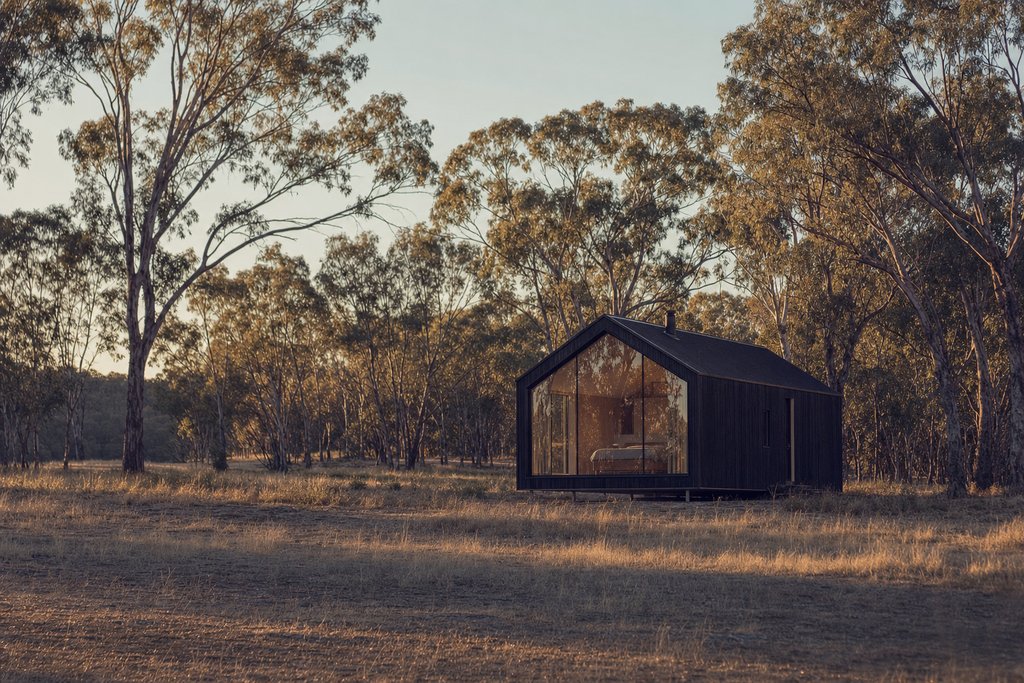
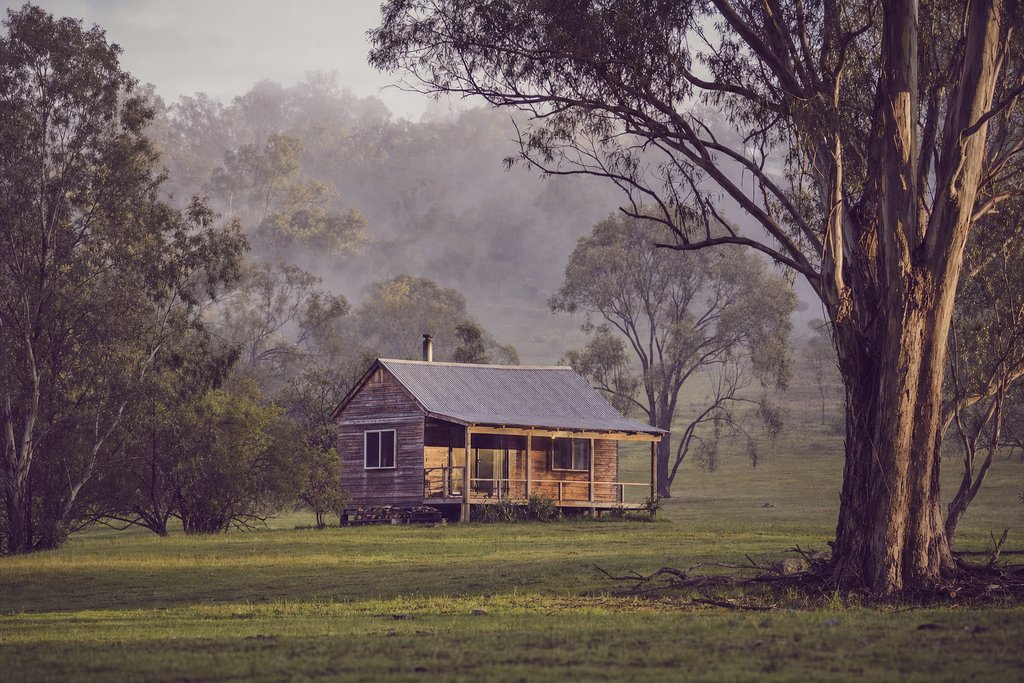
The model puts one or two small cabins on privately owned rural land, usually a working farm or a grazing property, and lets them by the night. The distinction from a holiday park is the point: you are not on a site with other cabins, you are in a paddock, and the nearest building is generally the farmhouse several hundred metres away.
The cabins themselves are small, typically a single room with a double bed, a bench, a two-burner gas hob and a window positioned at the view. Bathrooms are either a compartment in the cabin or a separate small structure a few steps away.
Off-grid, in practice
Off-grid is a specification, not a mood. In practice it means:
- Power: solar panels charging a battery, running lights, a small pump and a couple of USB sockets. There is no mains socket, no kettle and no hairdryer, and a cloudy day followed by a long evening genuinely depletes the battery.
- Water: rainwater from a tank. Hosts differ on whether it is treated for drinking; ask, and take bottled water if the answer is vague.
- Hot water and cooking: bottled gas. Hot water is usually instantaneous and finite in flow, not in volume; a thin shower, not a short one.
- Toilet: composting or chemical. Both work; both have instructions on the wall that are worth reading before rather than during.
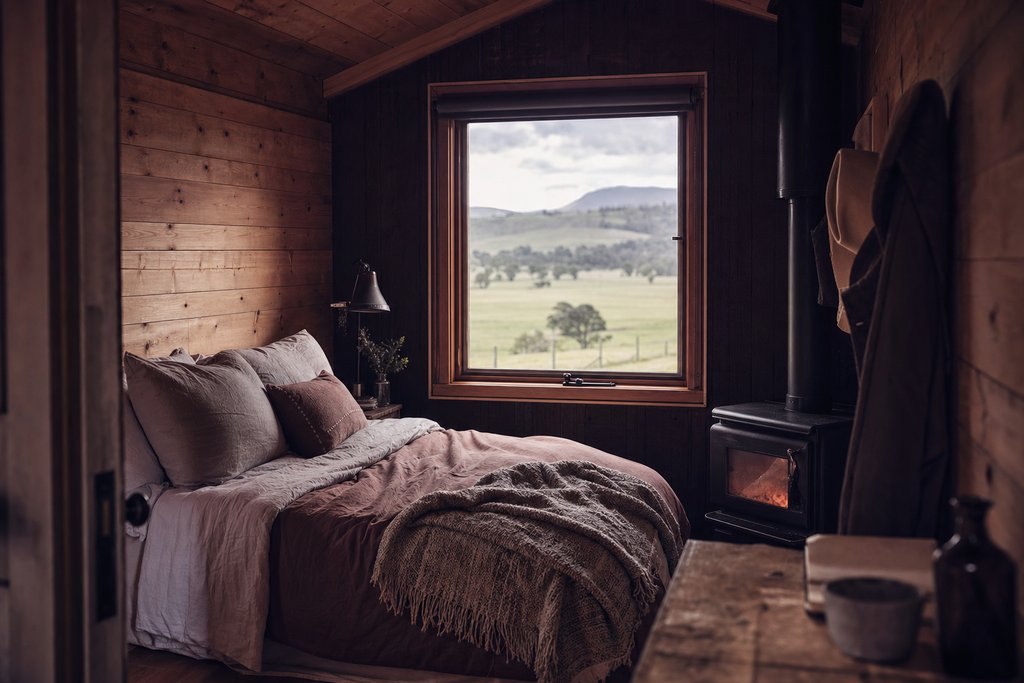
- Heating: a small wood burner in most of them, with a supply of split wood. This is the single most important feature in winter.
The overnight temperature
The Yarra Valley floor sits in a basin and drops well below the Melbourne forecast overnight: five or six degrees is normal and more in winter. A cabin with a wood burner is warm and one without is not, and the difference is not marginal.
Summer has the opposite problem: a small uninsulated timber box in a paddock with no shade gets very hot in the afternoon, and there is no air conditioning because there is no mains power to run one. Spring and autumn are the seasons this format is best in.
What to take
- Every meal, planned. The nearest shop is often twenty minutes away and country hours mean it may be shut by five.
- Drinking water, unless the host has confirmed the tank is potable.
- A torch or headtorch. There is no external lighting and the walk to a separate bathroom is genuinely dark.
- A power bank. The USB sockets are on the same battery as the lights.
- Warm layers regardless of the forecast, and closed shoes for a paddock.
What is nearby
The Yarra Valley's usual draws are within half an hour of most of these properties: the wine country around Yarra Glen and Healesville, the Healesville Sanctuary, and a run of produce stores and bakeries along the Melba Highway. Almost all of them close in the middle of the afternoon.
Further east, the Warburton redwoods and the Yarra River rail trail are an hour from the valley floor and make an obvious second day. The Dandenongs are on the other side of the ranges and are a separate trip, not an addition.
Who it suits
It suits two people who want a night with no signal and are content to cook on two burners. It does not suit anyone who needs mains power for medical equipment, anyone travelling with small children who will be up in the dark, or anyone expecting the stay to be serviced; there is no reception, no housekeeping and often no host contact except by phone.
Mobile coverage on the valley floor is patchy and is worse in the gullies. Several operators have no signal at all at ground level, which is either the entire appeal or a serious problem depending on why you came.
Booking notes
Weekends book out months ahead in spring and autumn; midweek is available at short notice and is roughly half the price. Two-night minimums are common at weekends. Check the access track: several properties have a farm track from the gate that is fine in a car in dry weather and marginal after rain, and hosts will say so if asked.
The rest of the Victoria material is in the Australia desk.
How the model works for the farmer
The arrangement is worth understanding because it explains the experience. A landholder, usually a working farm, hosts one or two cabins on a corner of the property and takes a share of the booking. The cabins are placed to be out of sight of the farmhouse and of each other, which is why you can be alone in a paddock a hundred metres from someone's working shed.
For the farm it is diversified income from land that is still grazed or cropped around the cabin. For the guest it means the property is not a resort and is not staffed: there is no reception, no housekeeping, and the host may be out on the tractor when you arrive.
Arriving
The access track is the thing to ask about. Many of these properties have a farm track from the gate to the cabin that is fine in an ordinary car in dry weather and marginal after rain. Hosts will say so honestly if asked, and asking is better than discovering.
Gates matter too. If a gate was shut when you arrived, it is shut for a reason, stock, and it needs to be shut behind you. That is the one rule every host cares about.
Arriving in daylight is strongly advisable for a first visit. There is no external lighting, the track is unmarked, and the cabin is not visible from the road.
The evening
Two things define it. There is no artificial light beyond what you brought and what the battery runs, and there is usually no signal. What that produces is an evening with nothing scheduled in it, which is either the entire point or an uncomfortable surprise.
The wood burner is the centre of it in the colder months. Most hosts supply split wood and kindling; lighting it is straightforward and keeping it in overnight is not, so expect the cabin to be cold by morning. A pre-warmed bed and a hat are not a joke in July.
Because there is no light pollution, the sky is genuinely dark. On a clear moonless night the Milky Way is visible with the naked eye across most of the valley, which is not true anywhere in Melbourne.
Cooking with two burners
Plan the meals instead of improvising. Two gas burners, one pan, one pot, a small sink and no oven is enough for a good dinner and not enough for an ambitious one. What works:
- Anything one-pan: sausages and vegetables, a curry, a risotto.
- Bread, cheese, cured meat and fruit for the second night, requiring nothing.
- Breakfast that is eggs and toast, cooked in the same pan.
- A thermos filled the first evening, so the morning coffee does not depend on relighting anything.
Take a bag for rubbish. There is no collection and everything leaves with you.
The valley around it
The Yarra Valley's usual draws are within half an hour of most of these properties: the wine country around Yarra Glen and Healesville, the wildlife sanctuary at Healesville, and a run of produce stores and bakeries along the Melba Highway. Almost all of them close in the middle of the afternoon, which catches out anyone planning a late lunch.
Further east, the Warburton redwoods and the rail trail along the old railway alignment make an obvious second day, an hour from the valley floor.
What to check before booking
- Is the tank water treated for drinking, or do you bring your own?
- Is there a wood burner, and is wood supplied?
- What is the access track like after rain?
- Is there any mobile signal on the property, and on which network?
- Is there a minimum stay at weekends, and what is the cancellation window?
- How far is the nearest open shop, and what time does it close?
Six questions, all of them answerable by the host in one message, and between them they decide whether the stay works.
Frequently asked questions
What is a shacky?
A small off-grid cabin placed on private farmland and let by the night. The model puts one or two cabins on a working property instead of a cluster on a dedicated site, so what you get is a paddock with a hut in it rather than a campground.
Is a tiny-house stay in the Yarra Valley off-grid?
Usually yes. Expect solar power with a battery, a composting or chemical toilet, gas for cooking and hot water, and tank water. That shapes the stay more than any other feature: there is no mains supply to fall back on, so the electricity budget is finite.
How far is the Yarra Valley from Melbourne?
About sixty to eighty kilometres depending on which end you are heading for, or an hour to ninety minutes by road. There is no useful public transport to the farm properties, so this is a car trip.
What should you take to an off-grid cabin?
Drinking water if the host does not supply it, more warm clothing than the forecast suggests, a torch, food for every meal, and a power bank. The valley floor drops several degrees below Melbourne overnight and the nearest shop can be twenty minutes away and shut.