Location file
Unlocked: The Pont Des Arts Love Lock Bridge In Paris
For about seven years the Pont des Arts was the most photographed railing in Paris. Visitors attached padlocks to the wire mesh panels and threw the keys into the Seine, in numbers that went from a novelty to a structural problem, and in June 2015 the city removed them all.
This file is about what actually happened, what is there now, and why the entry is worth keeping even though the thing people came for is gone. It is the clearest example on this site of a location whose status is gone while the place itself is entirely intact.
What happened
The Pont des Arts, 1st and 6th arrondissements
A pedestrian bridge across the Seine linking the Louvre with the Institut de France. The current structure dates from a 1980s reconstruction of an earlier iron footbridge.
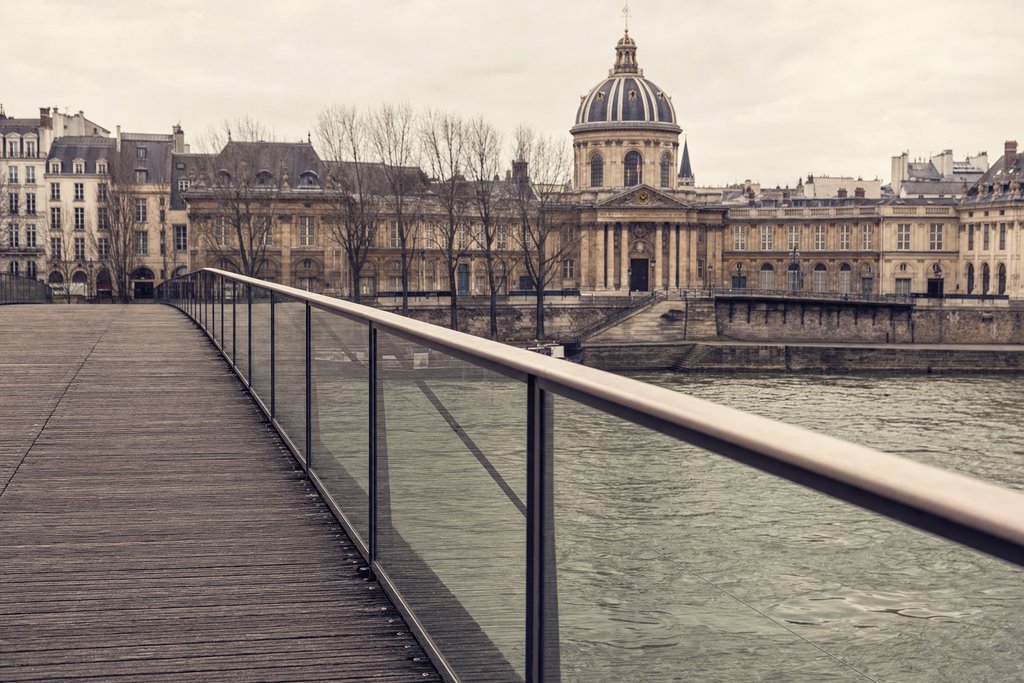
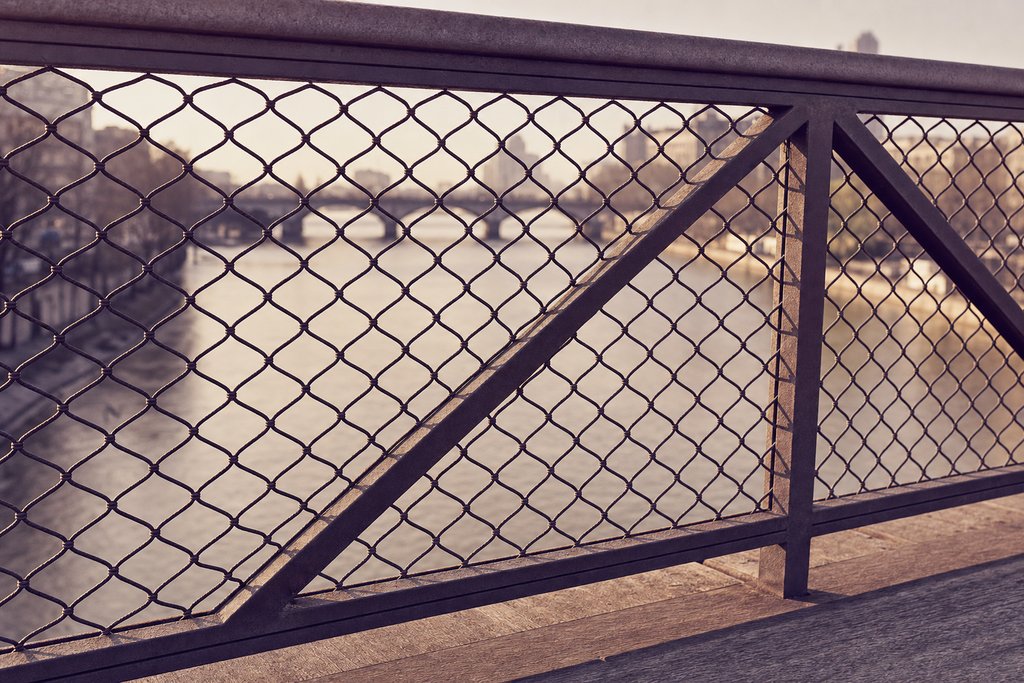
The lock practice began around 2008 and grew geometrically. By 2014 the accumulated weight on the mesh panels was estimated in the tens of tonnes, and in June that year a section of parapet gave way. The city fenced the panels, then in June 2015 removed roughly a million locks and replaced the mesh with glass and perforated panels that nothing can be clipped to.
- Address
- Pont des Arts, Paris 75006
- Status
- Changed: railings replaced 2015
- Access
- Open, pedestrian
- Checked
- Aug 2026
The locks themselves, Pont des Arts
Removed and largely sold or recycled, with proceeds directed to refugee support charities. A small number were retained. There is nothing on the bridge to indicate any of this happened.
- Address
- Pont des Arts, Paris 75006 — locks removed June 2015
- Status
- Gone
- Access
- Not on display
- Checked
- Aug 2026
Where the locks went instead
The practice migrated to other Paris bridges and to railings all over the city, and the city removes them as they appear. There is no sanctioned location. Some private attractions have installed their own lock structures as a paid alternative, which is a commercial answer to the problem, not an extension of it.
The wider lesson is one this site keeps running into: a location can become famous for something that is neither permanent nor permitted, and the fame outlives the thing by years. People still arrive at the Pont des Arts expecting locks a decade after they were cut off.
What the bridge is now
A wide, flat, timber-decked pedestrian bridge with benches, on the axis between two of the city's major buildings, and one of the few places in central Paris where you can stand in the middle of the river with a clear view in both directions. With the mesh gone the parapet is transparent again, which is what the bridge was designed for.
It is a well-used local space: people sit on the deck with a bottle of wine in the evening, and in summer it is busy until late. That is a better reason to go than a padlock was.
What to see from it and around it
- Upstream: the Île de la Cité and the towers of Notre-Dame, with the Pont Neuf in the foreground.
- Downstream: the Louvre's river frontage and, further off, the Eiffel Tower.
- North bank: the Louvre. Entry is timed and booked; the courtyard and the pyramid are free to walk into.
- South bank: the Institut de France, then the quays with the bouquinistes; the riverside bookstalls, which are themselves a listed part of the river frontage.
When to cross it
The bridge is free, open, level and step-free from the quays. Early morning and the hour before sunset are the two good times to photograph from it; the middle of the day is flat and crowded.
The Seine quays below are pedestrianised on long stretches and are the pleasanter walking route between the bridges. In summer parts of them are given over to temporary beaches and events, which closes the through route in places.
Why this entry stays in the index
Because deleting it would be the wrong answer. Someone who has seen the photographs will go to the Pont des Arts, and the useful thing a location index can do is tell them, before they get on the plane, that the locks came off in 2015 and are not coming back, and that the bridge is worth crossing anyway.
The rest of the European files are in the Europe hub, and the full index is at the location index. The Amsterdam bench in The Fault in Our Stars fails in the same way, and Christmas Day in Paris covers the other reason people arrive here in winter.
How it started and how fast it grew
The practice appeared on the Pont des Arts around 2008, spread by photographs, not by any local tradition, and grew geometrically for the reason such things do: a railing already covered in locks is an invitation, and an empty one is not.
By 2014 the city was estimating the accumulated weight in the tens of tonnes across the affected bridges. In June that year a section of parapet on the Pont des Arts gave way under the load and was removed for safety. The city fenced the mesh panels with plywood and board, then in June 2015 removed the locks entirely, around a million of them, and replaced the mesh with glass and perforated panels.
The removed locks were largely sold and recycled, with proceeds directed to refugee support organisations. Nothing on the bridge records any of this.
Why it was a structural problem, not an aesthetic one
The Pont des Arts is a light steel footbridge, and light is the operative word: it was designed for pedestrians, not for a distributed dead load hanging from its parapet. A padlock weighs very little. A million of them, concentrated along a railing rather than spread over the deck, do not.
The city's response was therefore engineering, not taste. The replacement panels are not simply prettier; they are surfaces nothing can be clipped to, which is the only permanent fix for a practice driven by the presence of previous locks.
Where else this happens in Paris
The practice migrated after 2015 to other bridges, to railings along the quays, and to fences around monuments. The city removes them, in some cases within days, and the current position is that there is no sanctioned location anywhere in Paris.
Some private attractions have installed their own lock structures as a paid alternative, which is a commercial answer rather than a revival. If attaching a lock somewhere is the point of the trip, that is where it can be done lawfully; the public bridges are not an option.
The bridge as a place to be
Removing the locks gave the bridge back its transparency, and it is now what it was designed to be: a wide timber deck between the Louvre and the Institut de France, with benches, no traffic, and a clear view in both directions along the river.
It is genuinely used. In the evening people sit on the deck with a bottle and something to eat, and in summer it stays busy until late. That is a better reason to cross it than a padlock ever was, and it is the recommendation this file actually makes.
The walk either side
- Start at the Louvre courtyard: free to walk into, and the pyramid is at its best before nine or after six.
- Cross the Pont des Arts westward for the view up-river to the Île de la Cité.
- The Institut de France and the quays below it, then east along the bouquinistes; the riverside bookstalls, which are a listed part of the river frontage rather than a market.
- Pont Neuf, the oldest standing bridge in the city despite the name, and the small triangular park at the tip of the island beneath it.
- Île Saint-Louis, the quieter of the two islands, if there is time.
That is about ninety minutes at an unhurried pace, entirely flat, and free from end to end.
Photographing it
The bridge runs roughly north-east to south-west, which means the good light is early morning looking down-river and the last hour looking up-river. Midday is flat and the deck is crowded.
Tripods are tolerated on the deck outside peak hours and are a nuisance to other users during them. Drones over central Paris require authorisation and are effectively prohibited in practice.
Practicalities
- Métro: Louvre–Rivoli or Pont Neuf on the north bank, Saint-Germain-des-Prés to the south.
- Access: level from both quays, free, open at all hours.
- The lower quays are pedestrianised on long stretches and are the pleasanter walking route between bridges; in summer sections close for temporary events.
- The Louvre operates timed entry booked online. The courtyard needs no ticket.
The wider point this entry makes
A location can become famous for something that was neither permanent nor permitted, and the fame outlives the thing by years. People still arrive at this bridge expecting locks a decade after they were cut off: which is precisely why the entry keeps its place in the index with a status rather than being quietly deleted.
Deleting it would leave the search unanswered. Keeping it with the date on which the change was verified answers it before the flight is booked, which is the whole job of a location file.
Frequently asked questions
Are the love locks still on the Pont des Arts?
No. The city removed them in June 2015 after a section of the parapet collapsed under the weight in 2014, and the mesh panels were replaced with glass and perforated panels that locks cannot be attached to. The bridge is open and the locks are gone.
Why were the love locks removed from Paris bridges?
Weight and safety. The accumulated locks were estimated at tens of tonnes, and in June 2014 a length of parapet gave way under the load. The city removed roughly a million locks in 2015 and redesigned the railings.
Where can you put a love lock in Paris now?
Nowhere sanctioned. The practice is discouraged across the city and locks attached to bridges are cut off. Some private attractions offer their own installations; the public bridges do not.
Is the Pont des Arts still worth visiting?
Yes, and arguably more than before. It is a pedestrian bridge on the axis between the Louvre and the Institut de France with one of the best river views in Paris, and without the locks the parapet is transparent again.