Victoria desk
A Melburnian's Guide To Melbourne's Best Dessert Stops
Melbourne's dessert scene is usually written up as a list of shops. That is the least useful way to approach it, because the shops change and the districts do not. What actually decides your evening is which of the three clusters you are in, what time it closes, and whether the tram that gets you there is still running when you want to leave.
This file is organised by district, not by ranking. Each section gives what the area is good at, when it shuts, and how to reach it: the information that survives a change of ownership.
The three dessert districts
| District | Known for | Typical closing | Tram |
|---|---|---|---|
| CBD & Chinatown | Late counters, soft serve, Asian dessert bars | Midnight–2am weekends | Free tram zone |
| Fitzroy & Collingwood | Gelato, bakeries, doughnuts | 10–11pm | 11, 86 |
| Carlton | Italian pasticcerie, cannoli, granita | 8–9pm | 1, 6 |
The CBD and Chinatown: the late shift
Little Bourke Street and the lanes off it carry Melbourne's only genuinely late dessert trade. The style is Asian dessert-bar, not European patisserie: shaved ice, taiyaki, soufflé pancakes, soft serve with an unreasonable number of toppings, and a queue outside on a Friday that is part of the point.
The practical advantage is the free tram zone, which covers the whole grid: you can move between four or five counters without paying a fare, and the City Circle tram runs a loop past most of them. The practical disadvantage is that the CBD's dessert bars turn over faster than any other category of Melbourne food business, so a name from three years ago is a poor bet and a street is a good one.
Fitzroy and Collingwood: gelato and bakeries
North of the city, Brunswick Street and Smith Street run parallel for about two kilometres and between them hold most of Melbourne's serious gelato and a good part of its bakery trade. This is where to go if you want something made that morning rather than assembled at the counter.
Gelato here is taken seriously enough that the good places make in small batches and run out; going at nine on a Saturday means choosing from what is left. The bakeries are a morning proposition, not an evening one, which catches out visitors who arrive at eight expecting a doughnut.
Smith Street and Brunswick Street are each a single tram ride from the city, the 86 and the 11 respectively, and are close enough to walk between at the southern ends. The Melbourne cafe guide covers the same two streets for daytime eating.
Carlton: the Italian pasticcerie
Lygon Street is the oldest of the three districts and the one most changed by the other two. The Italian pasticcerie that made its name are still there (cannoli filled to order, sfogliatelle, granita in summer, and coffee that predates the third-wave roasters by fifty years) but there are fewer of them than there were, and they keep older hours.
Several close on Mondays and most are shut by nine. Going to Carlton for dessert is a before-nine decision, and it works best combined with dinner on the same street rather than as a separate trip.
What to order in each district
- Chinatown: soufflé pancakes if you have forty minutes, shaved ice if you do not. Portions are large and are designed to be shared.
- Fitzroy: gelato in a cup rather than a cone, and ask what was made that morning. Pistachio and fior di latte are the two flavours that expose a bad gelateria.
- Carlton: cannoli, filled while you wait. A pre-filled cannolo has a soft shell and is a different food.
Getting around, and getting home
The free tram zone covers the CBD grid and Docklands and stops at the edge of the city: Fitzroy, Collingwood and Carlton are all outside it, so you need a Myki card, which is sold at stations, 7-Eleven stores and machines at major stops.
Trams run to about midnight on weeknights and all night on Friday and Saturday on the main routes. The all-night services are the reason the CBD carries the late trade: it is the one part of the city you can leave at two in the morning without a taxi.
Seasonal notes
Melbourne's dessert trade is markedly seasonal in a way its coffee trade is not. Gelato queues in Fitzroy in February are twenty minutes long and non-existent in July; granita on Lygon Street is a summer-only item; the CBD's soft-serve counters trade steadily year round because they are indoors and the weather is irrelevant.
The city's other food files (the cafe guide and, further afield, the Canberra guide ) cover the daytime end. The Australia desk holds the rest of the Victoria material.
How the three districts came to be different
The split is historical, not planned. Carlton's pasticcerie arrived with post-war Italian migration and have been on Lygon Street for sixty years. Fitzroy and Collingwood's gelato and bakeries came with the gentrification of two industrial suburbs from the 1990s. Chinatown's late dessert bars are the newest layer, arriving with international students and East Asian franchising from about 2010.
Because each wave settled where property was available at the time, the three have stayed geographically distinct, and because each brought its own trading culture, they keep different hours. That is why closing time, not menu, is the thing that decides an evening here.
Queueing, and whether it means anything
A queue outside a Chinatown dessert bar on a Friday is partly a signal and partly a design: rooms are small, service is deliberately unhurried, and the queue is visible from the street because that is where it has to be. It is not reliable evidence of quality.
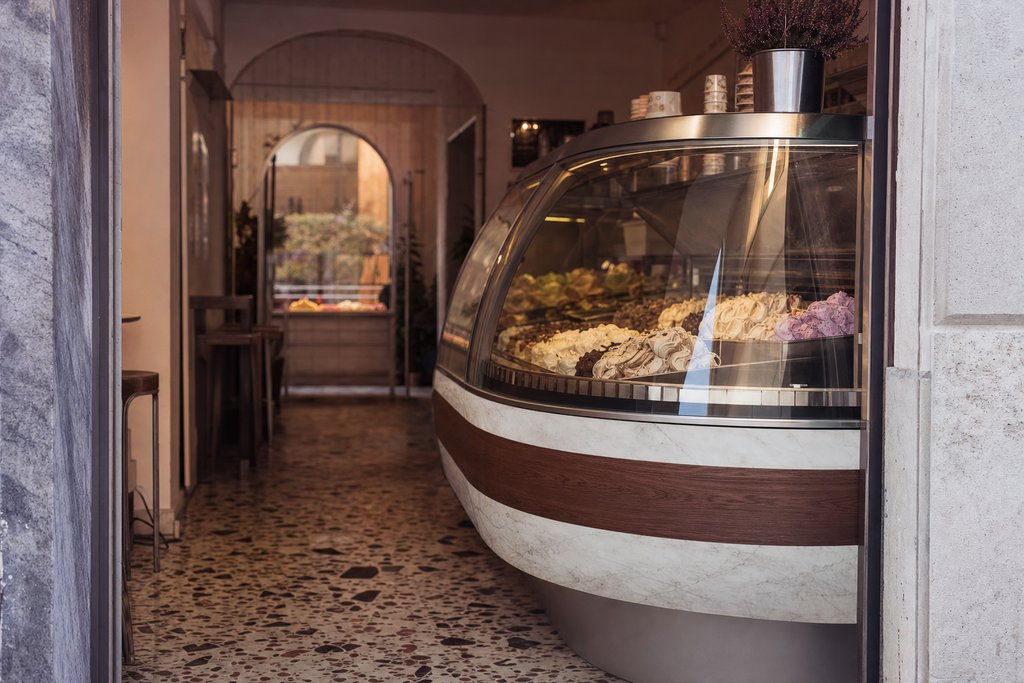
Better signals: a short flavour list that changes, a counter where you can see the work happening, and staff who can tell you what was made that morning. A gelateria with twenty-eight flavours in tall bright peaks is displaying, not making: good gelato is stored flat in covered pozzetti and slumps rather than peaks.
Beyond the three districts
- Footscray and Sunshine: Vietnamese and East African bakeries west of the city, open early, cheap, and almost entirely unvisited by anyone not local.
- Springvale and Box Hill: the largest concentration of East and South-East Asian dessert trading in the state, well beyond the inner city and worth the train.
- Brunswick: Middle Eastern and North African sweets along Sydney Road, including baklava and knafeh made on site.
- South Melbourne Market: Wednesday and Friday to Sunday, with a run of counters inside and the best daytime option south of the river.
Trams, timing and getting home
The free tram zone covers the CBD grid and Docklands and stops at the edge of the city, so Fitzroy, Collingwood and Carlton all need a Myki card: sold at stations, convenience stores and machines at major stops. Trams run to about midnight on weeknights.
On Friday and Saturday the Night Network runs trams all night on the main routes, which is precisely why the CBD carries the late dessert trade: it is the one part of the city you can leave at two in the morning without a taxi. Plan the evening around that rather than around the menus.
What to order, by district
| District | Order | Why |
|---|---|---|
| Chinatown / CBD | Soufflé pancakes, shaved ice | Made to order; portions are designed to share |
| Fitzroy / Collingwood | Gelato in a cup, pistachio and fior di latte | The two flavours that expose a bad gelateria |
| Carlton | Cannoli, filled to order | A pre-filled shell has gone soft and is a different food |
| Brunswick | Knafeh, warm | Made in trays and served from them; timing matters |
Seasonal desserts worth timing a visit for
- Summer: granita on Lygon Street, and gelato queues in Fitzroy that are worth the twenty minutes in February and non-existent in July.
- Autumn: chestnut and fig in the Carlton pasticcerie, briefly.
- Winter: the CBD's soufflé pancakes and hot desserts come into their own, and the queues shorten everywhere else.
- Spring: the bakeries in Fitzroy and Brunswick switch to stone fruit, and the street tables come back out.
Doing it with children
The CBD counters are loud, small and standing-room, which is difficult with a pram. Fitzroy's gelaterias and the Carlton pasticcerie both have room and chairs, and both close early enough to suit. South Melbourne Market on a weekend morning is the easiest option of all.
Frequently asked questions
Where do Melburnians actually go for dessert?
Three clusters carry most of it: the CBD laneways and Chinatown for late-night counters, Fitzroy and Collingwood along Smith and Brunswick streets for gelato and bakeries, and Carlton along Lygon Street for the older Italian pasticcerie. Each has a different closing time, which matters more than the menus.
What time do Melbourne dessert bars close?
Chinatown and the CBD dessert bars run latest, commonly to midnight and past it at weekends. Fitzroy and Collingwood mostly close between ten and eleven. Carlton pasticcerie are the earliest, often shutting by nine, and several close on Mondays.
Is there a dessert place in Melbourne open after midnight?
Yes, in the CBD and Chinatown, where several counters trade until one or two in the morning on Friday and Saturday. Outside those two areas late trading is rare, and a suburb that looks lively at nine can be shut at ten.
How do you get between the dessert districts?
Trams. The free tram zone covers the CBD and Chinatown; Fitzroy and Collingwood are the 86 and 11 north along Smith and Brunswick streets; Carlton is the 1 and 6 up Lygon Street. All three clusters are within twenty minutes of the centre.