Victoria desk
Re-Live The Classics At Melbourne's Historic Astor Theatre
The Astor is the seam between the two halves of this site. It is a Melbourne building with a Melbourne history, and it is also a cinema: which makes it the one place in the Victoria files where the local desk and the screen-location index are describing the same thing.
It opened in 1936 on the corner of Chapel Street and Dandenong Road in Windsor, and it has never been subdivided. That single fact separates it from almost every other cinema of its generation: the economics of the 1970s turned picture palaces into multiplexes or car parks, and the Astor became neither.
The building
Chapel Street and Dandenong Road, Windsor
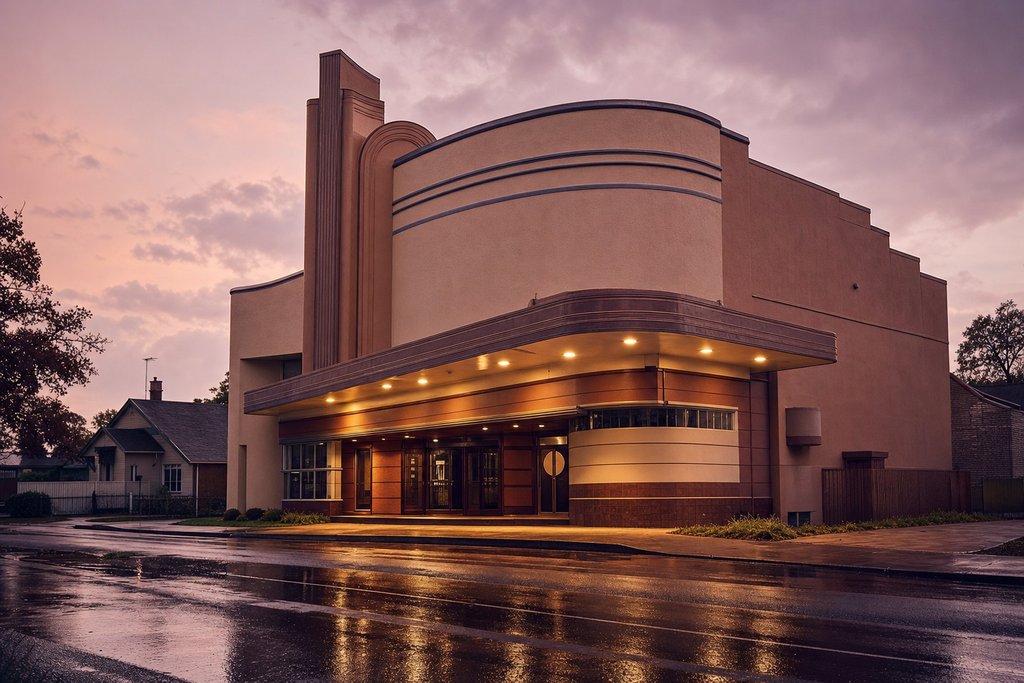
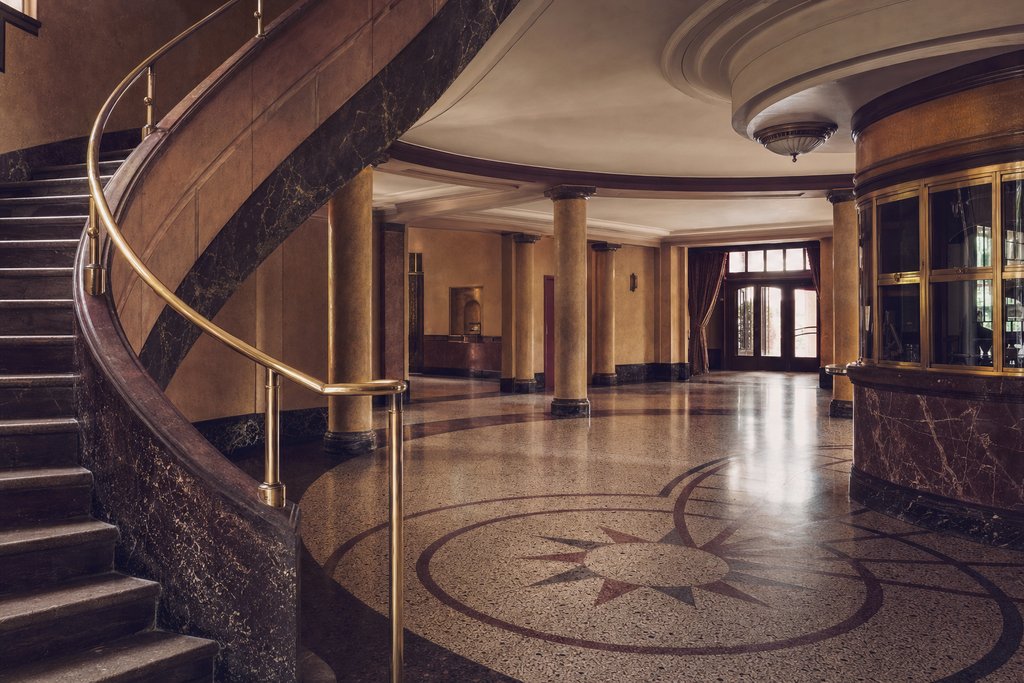
A streamline-moderne corner building with a curved rendered facade, a vertical fin sign and a marquee over the footpath. Inside, a single auditorium seating about eleven hundred across stalls and dress circle, with the original proscenium, a gold curtain that still opens on cue, and plaster detailing that survived the decades when nobody thought it was worth anything.
The floor creaks. The seats are wide, upholstered and older than most of the audience. There are no cup holders, and the lack of them is a house position, not an oversight.
- Address
- Corner of Chapel Street and Dandenong Road, Windsor, Victoria
- Status
- Standing
- Access
- Open, ticketed sessions
- Checked
- Aug 2026
The projection
The Astor runs 35 mm and 70 mm film alongside a 4K digital projector, and publishes the format with each session. That is a rarer thing than it sounds. Film projection requires prints, which are expensive to strike and hire and fragile to run, and it requires projectionists who can thread a machine; a skill that left most cinemas within a decade of the digital changeover.
For a proportion of the audience the format is the reason to attend rather than a detail of it. A 70 mm print on a screen this size is not a nostalgic experience; it is a technically better image than most digital presentations, and the difference is visible from the back row.
The programme
The house runs a repertory calendar: classics, cult titles, anniversary screenings, selected new releases and, as a standing habit rather than an occasional event, double features. Two films for one ticket, usually thematically paired, usually finishing late.
The calendar is published as a printed folded sheet as well as online, and the printed version is worth picking up because it shows the whole season at once. Sessions sell out for the better known titles and the dress circle goes first.
Getting there and getting home
Windsor station is two hundred metres from the door on the Sandringham line, about twelve minutes from Flinders Street. Trams 5, 6, 64 and 78 all stop within a short walk; the 78 runs along Chapel Street itself. Street parking around the intersection is metered and restricted, and the side streets are permit-only in the evening.
The late finish is the thing to plan. A double feature can end after midnight, and the last train on the Sandringham line goes earlier than that on weeknights. On Friday and Saturday the all-night tram network covers Chapel Street, which is the reliable way home.
Before and after
Chapel Street runs north from the cinema into Prahran and South Yarra and carries a long strip of places to eat, most of which stay open later than the inner north manages. The cafe guide covers the daytime end of the same street, and the dessert file covers the late one.
A workable half-day is a late breakfast in Windsor, an afternoon session at the Astor and dinner further up Chapel Street. In winter that is one of the better ways to spend a Melbourne Sunday.
Why it is in a filming locations index
Because the building is not a location, it is a survivor, and this site's index is about places where film is physically present. Most of the entries here are places a camera pointed at once. The Astor is a place where film (the material, on a reel, running through a machine) still happens every week.
It has also had a precarious few decades: closure was proposed more than once, the lease has changed hands, and the building is now heritage listed. The listing protects the fabric. It does not protect the programme, which depends on people buying tickets.
The rest of the Victoria material is in the Australia desk, and the screen-location index proper is at the location index.
Why single screens disappeared
A picture palace of this size was built for an era when a cinema showed one film to a thousand people several times a day. When television took the audience and distribution shifted to shorter runs, the economics reversed: an operator needed several small rooms showing several films rather than one large room showing one.
The response across the English-speaking world from the late 1960s was to subdivide, insert a floor at the dress circle line and partition the stalls, or to demolish. Melbourne lost most of its suburban picture palaces to one or the other. The Astor survived because it kept trading through the worst of it on a repertory model that needed the single room to work.
Film against digital, in practice
A 70 mm print is roughly four times the negative area of 35 mm, and at the size of this screen the difference is not subtle. Grain structure, highlight roll-off and the way movement reads are all visibly different from a digital presentation, and the effect is strongest on films that were photographed and finished on film in the first place.
The costs are real. Prints are expensive to strike and to hire, they arrive in heavy cans, they scratch, and they need a projectionist who can thread and change over between reels. Very few venues anywhere still carry all three requirements, which is what makes the programme here unusual, not nostalgic.
Reading the programme
The calendar is published as a printed folded sheet as well as online, and the printed one is worth picking up because it shows a whole season at once. Three things to look for on it:
- The format, printed with each session: 35 mm, 70 mm or digital.
- Double features, two films on one ticket, usually paired by director, star or theme, and usually finishing late.
- Anniversary and restoration screenings, where a new print or a restored transfer is the reason the film is on.
A half day around it
Chapel Street runs north from the cinema through Windsor into Prahran and South Yarra, and it carries a long strip of places to eat that stay open later than the inner north manages. A workable plan: late breakfast in Windsor, an afternoon session, and dinner further up the street.
Prahran Market, a few minutes west, trades Tuesday and Thursday to Sunday and is the best food market south of the river. The cafe guide covers the daytime end of the same street and the dessert file the late one.
Practical notes
- Getting there: Windsor station on the Sandringham line, two hundred metres away; trams 5, 6, 64 and 78 all stop nearby.
- Getting home: a double feature can finish after midnight and the last train is earlier than that on weeknights. On Friday and Saturday the all-night tram network covers Chapel Street.
- Parking around the intersection is metered and the side streets are permit-only in the evening.
- Seating: the dress circle sells first and is the better room. Bookings are by seat.
- The building is heritage listed, which protects the fabric. It does not protect the programme, which depends on tickets being sold.
Frequently asked questions
Where is the Astor Theatre in Melbourne?
On the corner of Chapel Street and Dandenong Road in Windsor, about four kilometres south-east of the city centre. Trams 5, 6, 64 and 78 all stop within a short walk, and Windsor railway station is two hundred metres away.
Does the Astor still show 35 mm film?
Yes. It is one of a small number of cinemas anywhere still projecting 35 mm and 70 mm prints as part of a regular programme, alongside a 4K digital projector. The format for each session is published with the programme, because for a substantial part of the audience it is the reason to attend.
How many seats does the Astor have?
About eleven hundred across the stalls and the dress circle, in a single auditorium. That single-screen configuration is what makes it unusual: almost every other cinema of its size has been subdivided into a multiplex.
What does the Astor show?
A repertory programme of classics, cult titles and double features alongside selected new releases. Double bills are a house habit, not an occasional event, and the programme is published in a printed calendar as well as online.