About This Reference: What It Covers and How It Works
A reference to screen locations that can actually be visited, plus a standing local desk for Melbourne and regional Victoria.
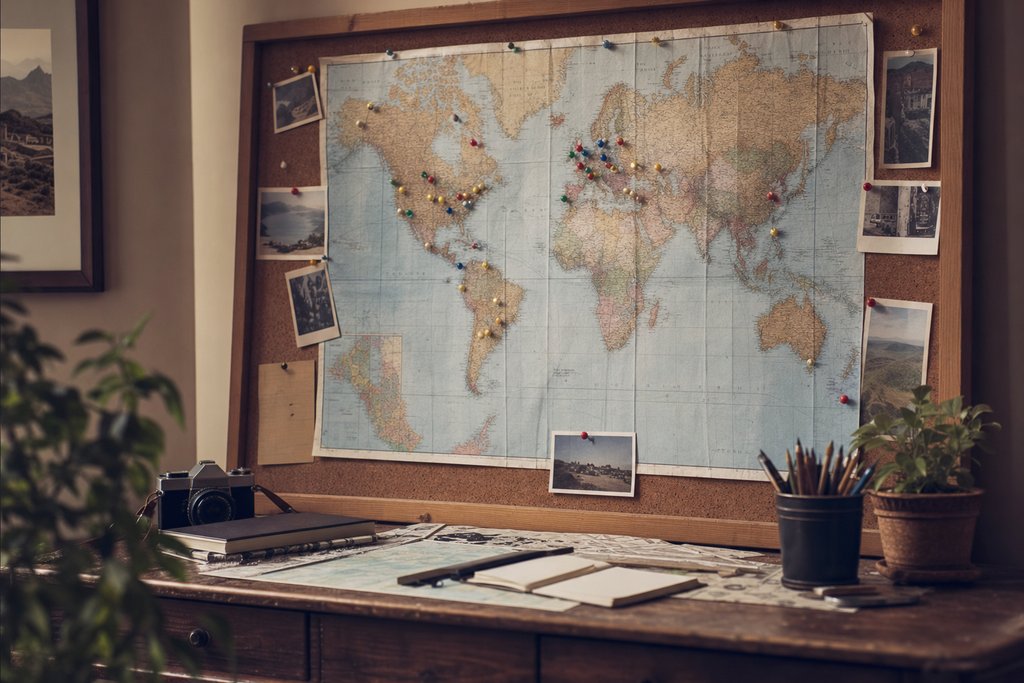
What this site is
Enchanted Serendipity is an index of film and television locations that can be visited, and of the places around them. Each entry gives the production, the address or the landform, what the camera used it for, whether it still stands, whether you can get to it, and the month it was last checked.
Alongside that runs a standing desk for Melbourne and regional Victoria, written to the same standard. That is not a second subject bolted on: Victoria carries screen locations of its own, and the cafés, laneways, forests and day trips around them are what a reader travelling there needs next.
The four things this site promises
These are the only claims made anywhere on the site, and each of them is checkable by counting.
- Every location carries an address
- An address, or, for a landform that has none, a description precise enough to navigate by: the car park, the trailhead, the mile marker. An entry that cannot meet this is not published.
- Every file says when it was last checked
- The month appears in the header of each file and on every location entry inside it. No file claims to be current; each one says when it was verified and lets that date be judged.
- Every location is marked standing, changed or gone
- Standing means it is still there and recognisable. Changed means it survives but has been rebuilt, relocated or converted enough that it no longer matches. Gone means it has been removed, and the entry stays, because arriving to find a car park is a failure either way.
- Every picture is made for this site, and says how
- No film stills, no posters, no publicity photography, no stock. The photographs are made with an AI image tool and carry the "AI" mark on the image, in the caption and in the alternative text; the drawings are made by hand. That constraint is why the files describe what the camera pointed at rather than showing it, and how AI is used here sets out the rest.
How an entry is put together
A production enters the index once at least one of its locations can be tied to a real place. A town name is not enough. Sound-stage work does not appear at all, because there is nowhere to stand.
Once the place is established, the entry records what the camera used it for, an access line saying whether it is open, visible from public land or private, and a status. Private houses are marked as private and are not given a house number where the owners have not sought the attention; working schools, studios and places of worship are marked with the constraint that applies to them.
The location index is generated from the files themselves after every build, so a row in the index and the page it links to cannot disagree about an address or a status. Nothing is typed into the index by hand.

How an entry is written
Entries carry no byline. They are written and maintained editorially, and in place of a personal claim to authority each file carries a date that can be checked against the ground.
The index makes no completeness claim. The USA master guide has carried a hundred-plus in its title since 2019; the site itself promises no such number, and the working index is shorter than that because an address that cannot be pinned is left out, not guessed.
The travel card file is background on card types and fee structures, not financial advice: it names no products, quotes no rates and issues no verdicts.
Nothing on the site is for sale. There is no advertising, and a place in an index cannot be bought.
Corrections
Locations change faster than any index tracks. A building on this site may have been replaced, a road realigned, a beach lost, an access rule tightened since the month printed on the file. Where that has happened, the entry is wrong until it is re-checked, and the printed date is what tells you how likely that is.
Correspondence about a specific entry is welcome, and the address is on the contact page. No response time is offered, because one that cannot be guaranteed should not be advertised.
Where to start
The location index is the fastest route into the material: one filterable row per address, searchable by town, state or production. The USA master guide is the largest single piece of work here, and the Australia desk holds the Victoria material. Every page on the site is listed in the site index.
Frequently asked questions
Is this an official site for any of the productions it covers?
No. It is an independent editorial reference about places that can be visited. It has no relationship with any studio, production company, distributor or venue named on it, and none of the material published here is supplied or approved by them.
Who writes the entries?
The entries are written and maintained editorially, not by a named author, which is why no byline appears on them. What stands in place of a byline is the check date: every file states the month its contents were last verified, and that is a claim you can test rather than a person you have to trust.
How are the addresses verified?
An entry only ships once its location can be tied to a specific street, building or landform, and once a status and a check month can be recorded for it. Where a location cannot be pinned that precisely, it is left out instead of described vaguely; the index is deliberately shorter than it could be.
Why are there no film stills or posters anywhere on the site?
Because they are not ours. Stills, posters and publicity photography belong to the studios that produced them. Every picture here is made for this site instead: the photographs with an AI image tool, each one marked "AI" on the image, in its caption and in its alternative text, and the drawings by hand. That constraint is also why the entries describe what the camera pointed at rather than showing it, and the page "How AI is used here" explains the mark.
How often is the site checked?
Files are re-checked in sweeps, and each one carries the month of its most recent check in the header. A date that has aged is more useful than an undated claim to be current, so the month is printed, not implied.