AI on This Site: Which Pictures Are Generated and How the Text Is Made
Every photograph here was made with an AI image tool, and every one of them says so. This page explains the mark once, so that each picture does not have to.
The short version
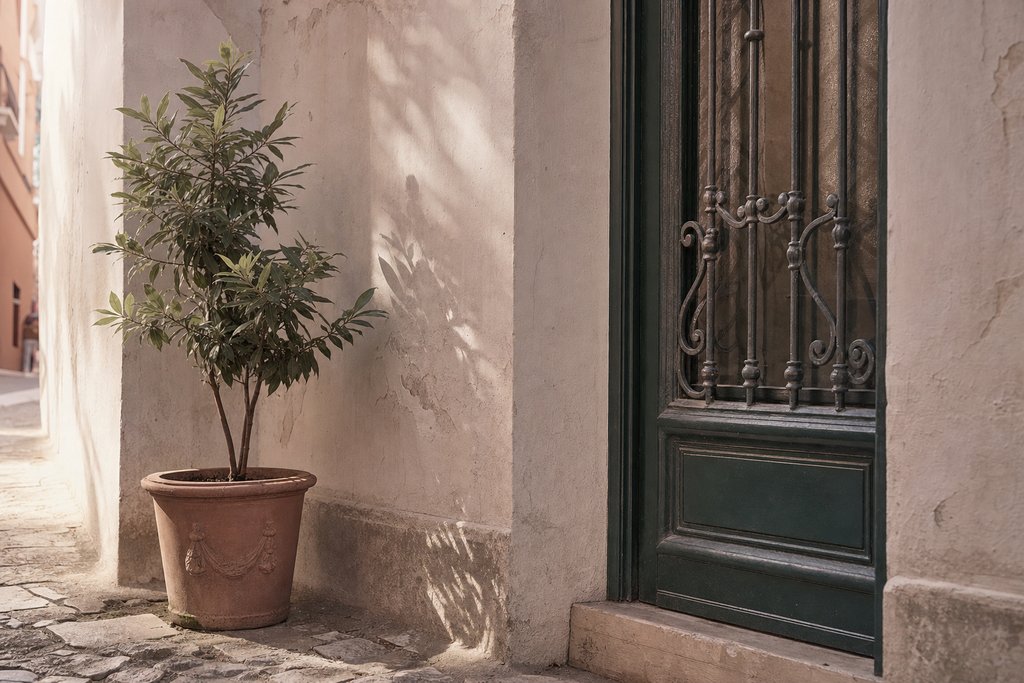
Every photograph on this site was created with an AI image tool. Each one carries a visible "AI" mark on the picture itself, the words "AI-generated image" in its caption, and the same note at the end of its alternative text. The drawn artwork and the logo are not generated; they were made by hand, and they look like drawings because they are.
The text is written with AI assistance and reviewed by a person before it is published. The addresses, the standing-or-gone status and the check month in each file are the part of this site meant to be acted on, and they are checked, not generated.
The pictures
The pictures on this site show real places: a laneway in Melbourne, a stairway in Seattle, a stretch of road in Utah. They are built to read as editorial travel photographs, and that is exactly why each one is marked. A picture that shows a real location convincingly, without being a photograph of it, is the case the labelling rules were written for, and marking it is not a formality here. A reader planning a trip should know which parts of a page are a record of the ground and which are an impression of it.
The mark sits in three places, because one is not enough on its own. It is on the image, so it is visible the moment the picture is. It is in the caption, so it survives being read rather than looked at. It is in the alternative text, so a screen reader carries it too. None of the three is a substitute for the others.
Why the pictures are made here instead of sourced
This index covers productions, and the obvious illustration for a page about a film location is a still from the film. Those stills, along with posters and publicity photography, belong to the studios that produced them, and none of them appears here. That is a deliberate limit, and it is the reason the entries describe what the camera pointed at rather than showing it.
Licensed stock photography covers famous skylines well and specific street addresses badly, and most of what this index names is a specific address. What remains is to make the pictures for the site, which is what was done, and then to say so on every one of them.
The text
AI tools are used for research and drafting. What is published is then read by a person, who checks the substance and the facts, and the file is re-checked in later sweeps. Editorial responsibility for everything published here sits with the site's operator.
No file carries a byline, and that is a decision rather than an oversight. A name on a page is a claim a reader cannot test. The month a file was last checked, printed in its header, is one they can: if it has aged, that is visible, and an aged date is more useful than an undated promise to be current.
Provenance, and what is never altered
It does not remove or alter the provenance information inside an image file. Every rendition of every generated picture carries the IPTC marking that records it as AI-generated, and the re-encoding steps that produce the WebP and AVIF versions carry that marking through instead of dropping it.
It does not present a generated picture as a photograph, anywhere, including in search results and link previews. It does not invent a photographer, a byline or a person who was there. And it does not fabricate provenance in the other direction either: nothing here is marked as a photograph that is not one.
Frequently asked questions
Is every picture on this site AI-generated?
Every photograph is. They were produced with an AI image tool for this site, and each one carries the "AI" mark on the image, in its caption and in its alternative text. The drawn artwork, the logo and the diagrams are not generated; they were made by hand and are plainly drawings, not photographs.
What does the "AI" mark on a picture mean?
That the picture was created by an AI image tool, not taken with a camera. It shows a real place, and it is built to look like an editorial travel photograph, but it is not a photograph of that place and nobody stood there to take it. Treat it as an impression of the location, and treat the address, the status and the check month in the text as the part you can act on.
Why not use real photographs instead?
Film stills, posters and publicity photography belong to the studios that made them and are not ours to publish. Stock photography does not cover most of the specific addresses in this index, and where it exists its licence usually excludes this kind of use. What is left is to make the pictures, and to say so on every one of them.
Is the writing on this site AI-generated?
AI tools are used to support research and drafting. Every published page is then reviewed by a person for substance and checked for facts before it ships, and is re-checked in sweeps afterwards. No byline appears on any file, which is deliberate: what stands in its place is the month each file was last checked, printed in its header.
Are the provenance markings in the image files left intact?
Yes. Every rendition of every generated picture carries the IPTC DigitalSourceType marking that records it as AI-generated, in the JPEG, the WebP and the AVIF alike. Nothing is stripped to obscure where an image came from, and no provenance marking is ever faked.